
Forbidden love and iconic dancing as Ballet Manila’s ‘La Bayadere’ returns
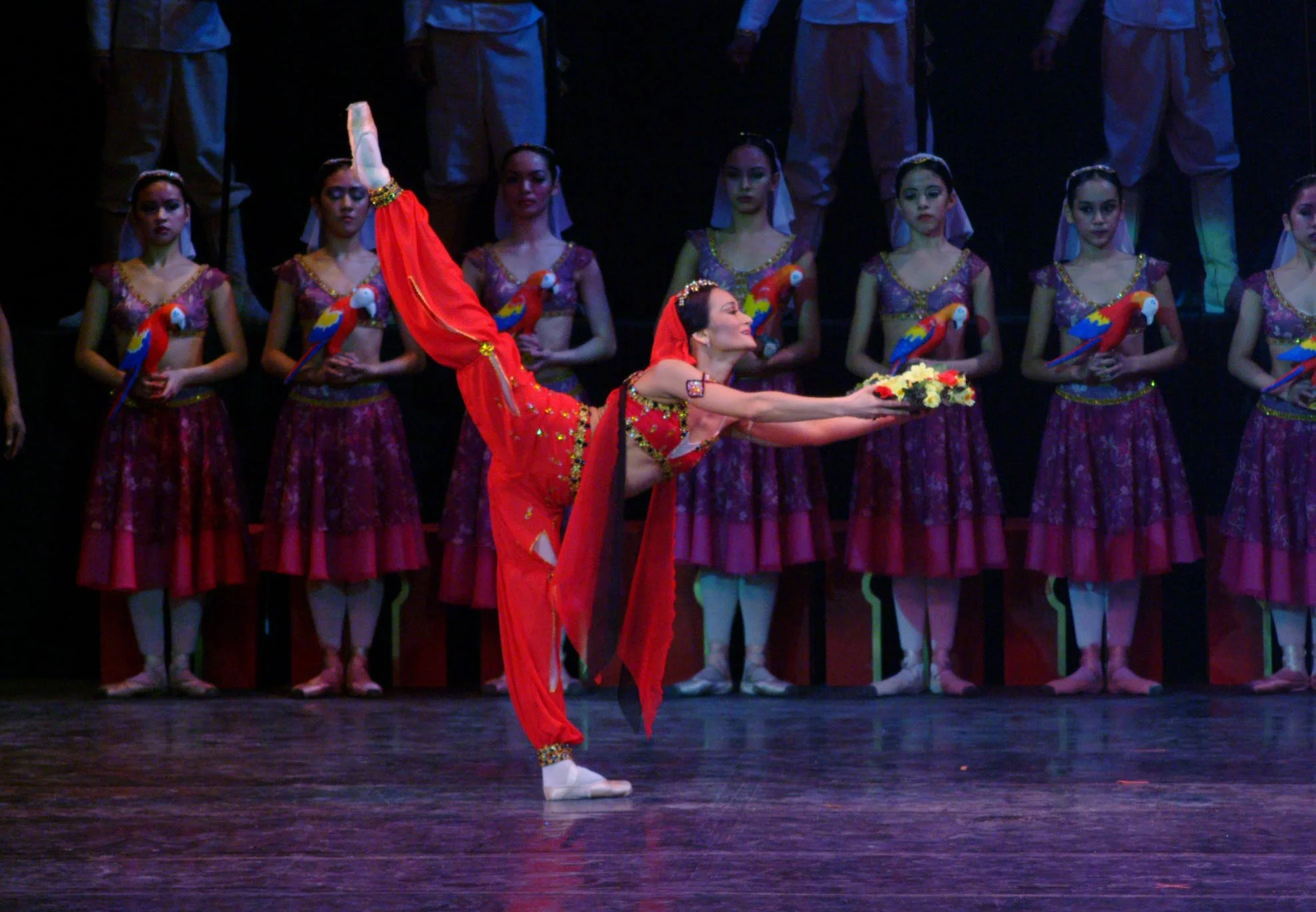
As Nikiya in La Bayadere (2013), Ballet Manila artistic director Lisa Macuja Elizalde does the scarf dance along with principal dancer Rudy De Dios. It was one of her last performances of the role as part of her Swan Song Series. Photo by Ocs Alvarez
By Susan A. De Guzman
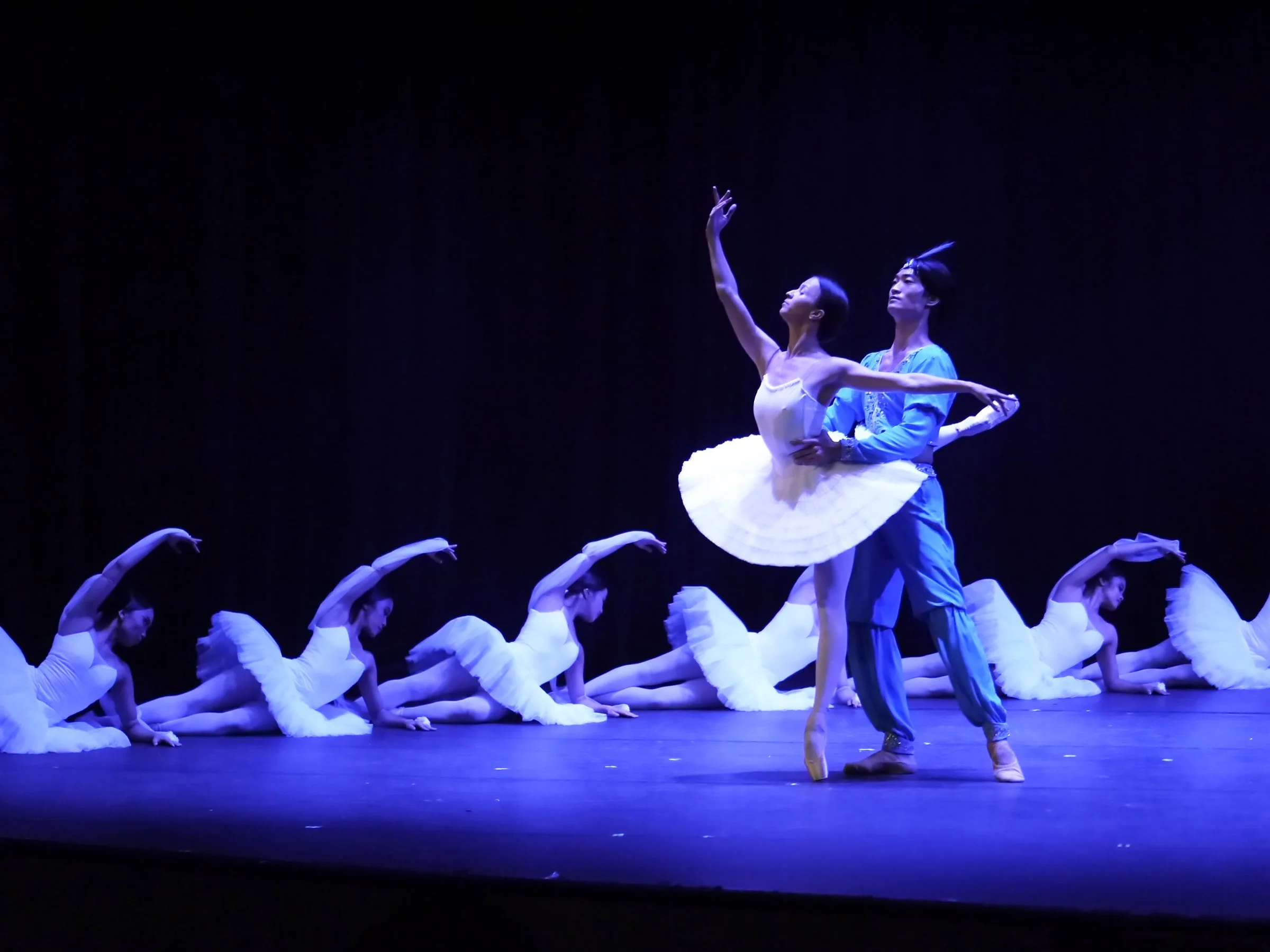
After 13 long years, Ballet Manila is bringing back La Bayadere—the story of a forbidden love between a temple dancer and a warrior showcasing the iconic Kingdom of the Shades scene that has the corps de ballet dancing in synchronized slow motion.
Mariinsky Ballet principal dancers Renata Shakirova and Kimin Kim bring to life the tragic love story of temple dancer Nikiya and warrior Solor in Ballet Manila’s La Bayadere which the company is restaging after 13 years.
The much awaited return of the ballet classic unfolds on August 14, 15 and 16 at Aliw Theater, Pasay City, with three shows headlined by the comebacking Mariinsky Ballet principal dancers Renata Shakirova and Kimin Kim as Nikiya and Solor. A fourth show will feature Ballet Manila principal dancer Abigail Oliveiro and soloist Noah Esplana who are making their debut in their respective lead roles.
La Bayadere ranks among the most demanding “white ballets,” along with Swan Lake and Giselle. Ballet Manila artistic director Lisa Macuja Elizalde explains, “They are called white ballets because they have entire acts where the ballerinas are all dressed in white and have to dance in intricate corps de ballet work, considered the most transparent of ballets where every line and every ballerina’s technique and all flaws are very seen.”
Ballet Manila principal dancer Abigail Oliveiro debuts two roles in the upcoming La Bayadere run, as the temple dancer Nikiya (above) and the princess Gamzatti. Photo by MarBi Photography
According to the prima ballerina, La Bayadere is considered the most difficult among all the white ballets. “The Kingdom of the Shades or Act 3 is the act that is considered the most dreaded by a company’s female corps de ballet,” she notes. “It’s a demanding showpiece that highlights their control and discipline because all the dancing is done in slow motion. Ballet Manila is the only ballet company in the Philippines that has this kind of superior corps de ballet ensemble.”
Set in India, La Bayadere revolves on the temple dancer Nikiya and the warrior Solor who swear eternal love for each other before the sacred flame. But the Rajah picks Solor to be the ideal partner for his daughter Gamzatti, hence putting an end to the union with Nikiya. At the wedding of Solor to Gamzatti, Nikiya has to dance and, owing to a plot between the Rajah and the bride, is bitten by a snake. The Brahmin who himself is in love with Nikiya offers her a potion that would save her life, but she chooses death over life without Solor. Ultimately, the grief-stricken Solor seeks out Nikiya and they are reunited in an alternate realm filled with the multiple spirits or “shades” of the bayadere.
Ballet Manila first presented La Bayadere in 2004 in a restaging by guest artists from the Mariinsky Ballet, Lisa’s mentor Tatiana Udalenkova and her husband, People’s Artist of Russia Sergey Vikulov, which was followed by another performance run in 2006. In both stagings, Lisa was partnered by the Mariinsky’s Maxim Chashchegorov. The ballet was then included in Lisa’s Swan Song Series in 2013 where she danced opposite guest artist Mikhail Martynyuk and Ballet Manila principal dancer Rudy De Dios in his debut as Solor.
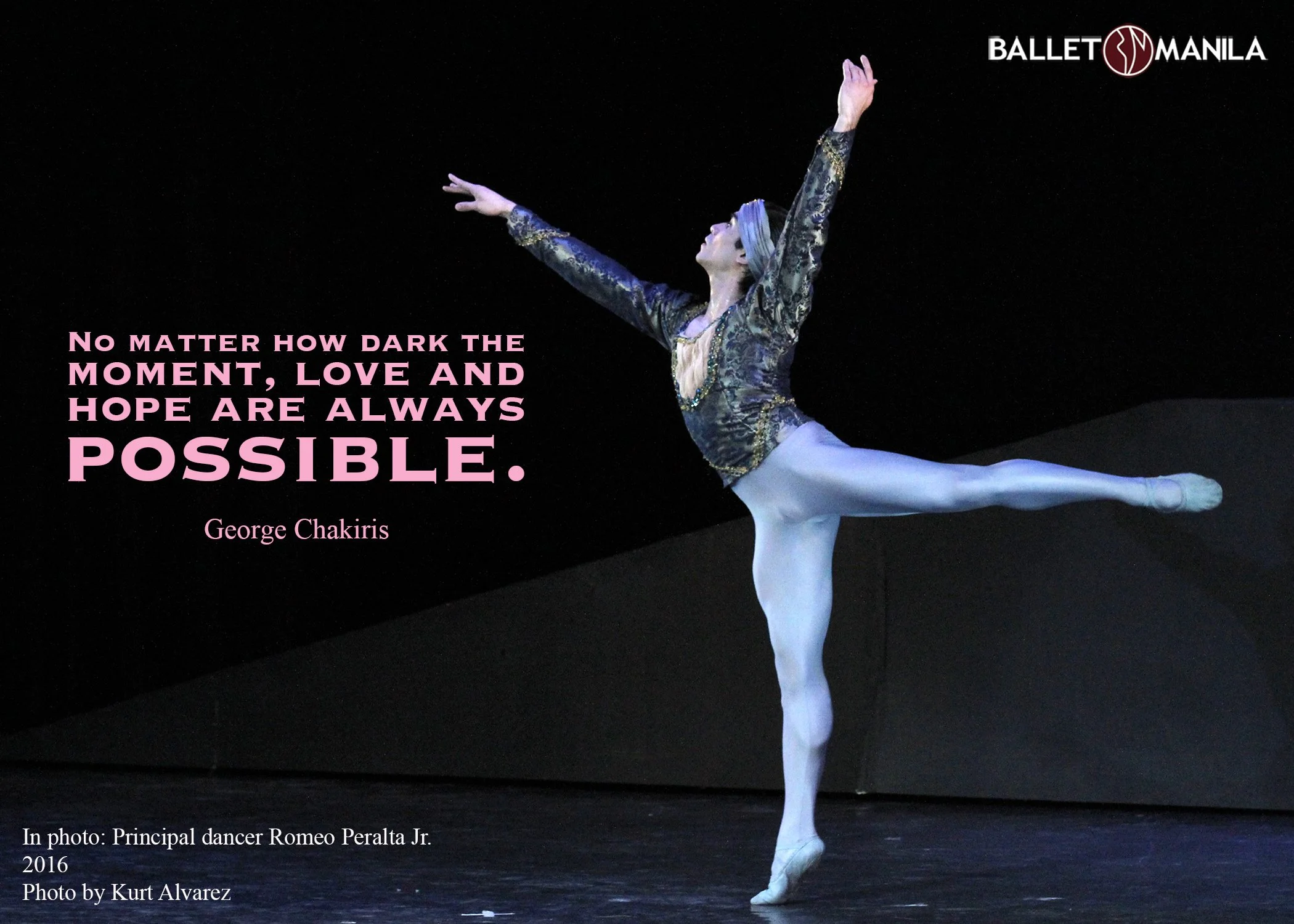
The Kingdom of the Shades, a showpiece of the corps de ballet’s synchronized movement in La Bayadere, is performed in BM 21 in 2016. Photo by Kurt Alvarez
La Bayadere is deemed an appropriate inclusion in Ballet Manila’s Prima season as it celebrates the 40th anniversary of Lisa’s return to the Philippines from her studies and subsequent soloist post in the Kirov Ballet (now the Mariinsky Ballet) in St. Petersburg. “It’s a ballet which I have danced many times before, not just the role of Nikiya and Princess Gamzatti, but even in the Trio in the Kingdom of the Shades. La Bayadere is a fitting showcase for the company and our guest artists from Marinsky Ballet.”
Ballet Manila soloist Noah Esplana debuts as Solor, the warrior torn between the love of two women—Nikiya whom he loves, and Gamzatti whom he has to marry. Photo by MarBi Photography
La Bayadere is among Lisa’s favorite ballets, and she singles out a particular dance of Nikiya that she enjoys the most. “This is known as the scarf dance, where the bayadere dances with a scarf which is held by the prince. It takes a lot of balance and control because the ballerina must give the illusion that she is dancing with the scarf, that the scarf is controlling her every movement.”
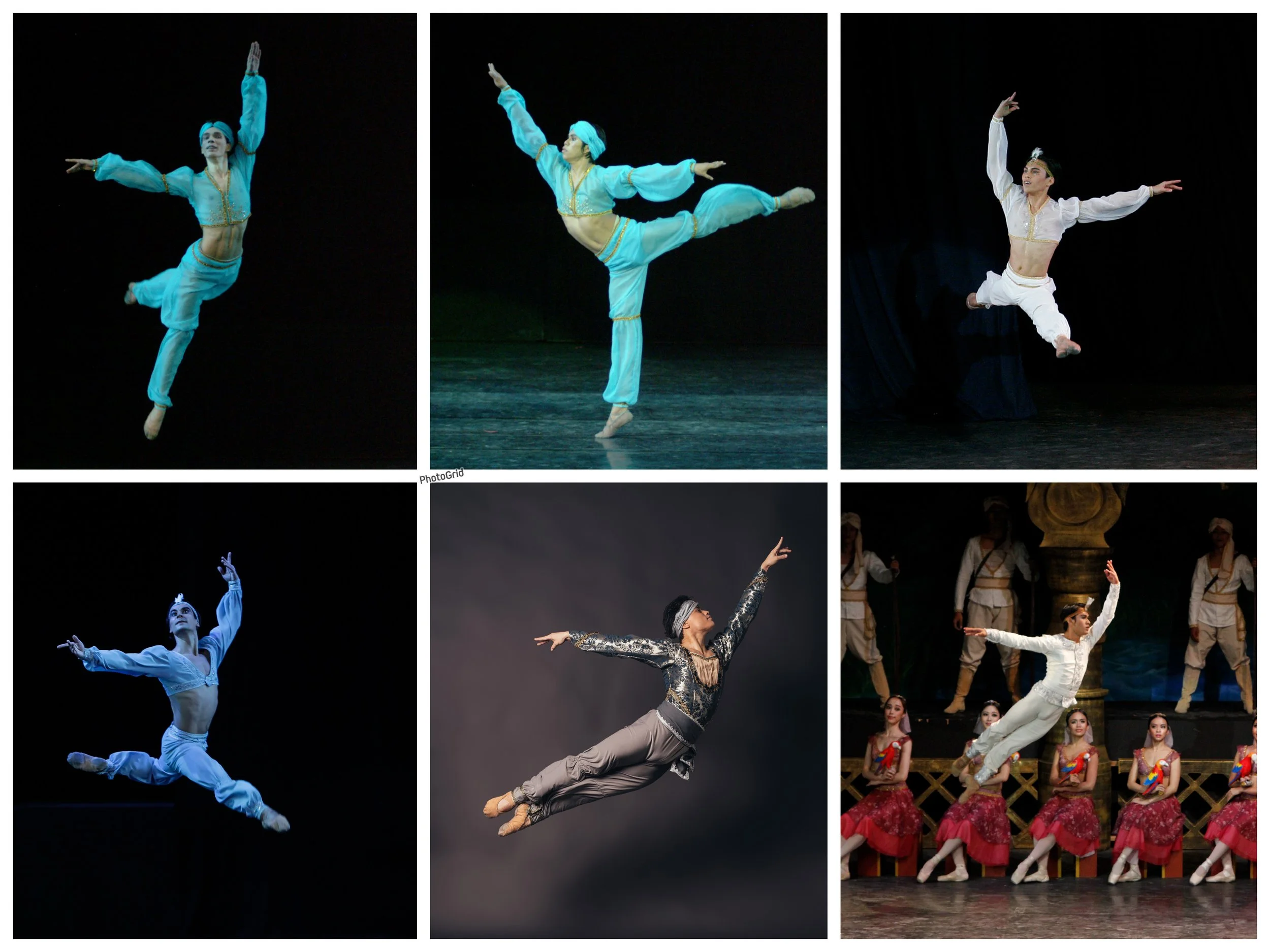
Apart from the Kingdom of the Shades, yet another remarkable display of artistry is the solo male variation of the Golden Idol (also known as the Bronze Idol) in Act 2. With his skin covered in glittering gold, the character is that of a temple statue coming to life – an offering during the wedding scene – and proceeds to engage in sharp movements and precise jumps. Ballet Manila co-artistic associate Gerardo Francisco Jr., who has executed the role in all three of the previous La Bayadere runs, cites the Golden Idol as physically and technically demanding even as the performance only lasts two minutes.
This latest staging of La Bayadere marks the debut of several dancers in a variety of roles. Apart from dancing as Nikiya in the second cast, Abigail Oliveiro will be Gamzatti to Kim Kimin’s Solor and Renata Shakirova’s Nikiya. Soloist Shamira Drapete will be taking on Gamzatti as well while soloists Rafael Perez and Jos David Andes will alternate as the Golden Idol.
Ballet Manila soloist Shamira Drapete takes on a new role as the princess Gamzatti who always gets what she wants. Photo by MarBi Photography
Apparently, many major ballet companies have pulled La Bayadere from their repertoire for such issues as outdated stereotypes and cultural appropriation. Lisa underscores, “It is quite rare to be able to watch this full-length anymore all over the world. I want to reiterate that art should transcend politics and the story of La Bayadere is historical fiction and shouldn’t be shunned as ‘not politically correct’ as it has become in other countries in the west.”
The artistic director underscores the multiple reasons why La Bayadere is a must-see by audiences. “I hope they will realize how important it still is to be kept alive as active repertoire in a ballet company’s season! I am hoping that the audience will take away that the music, choreography and story are timeless and appreciate and revel in the difficulty of performing such a classical ballet. I want audiences to realize that Ballet Manila is one of the very few ballet companies in the world that is able to perform this three-act classic and for that to happen in the Philippines is a feat to be very proud of!”
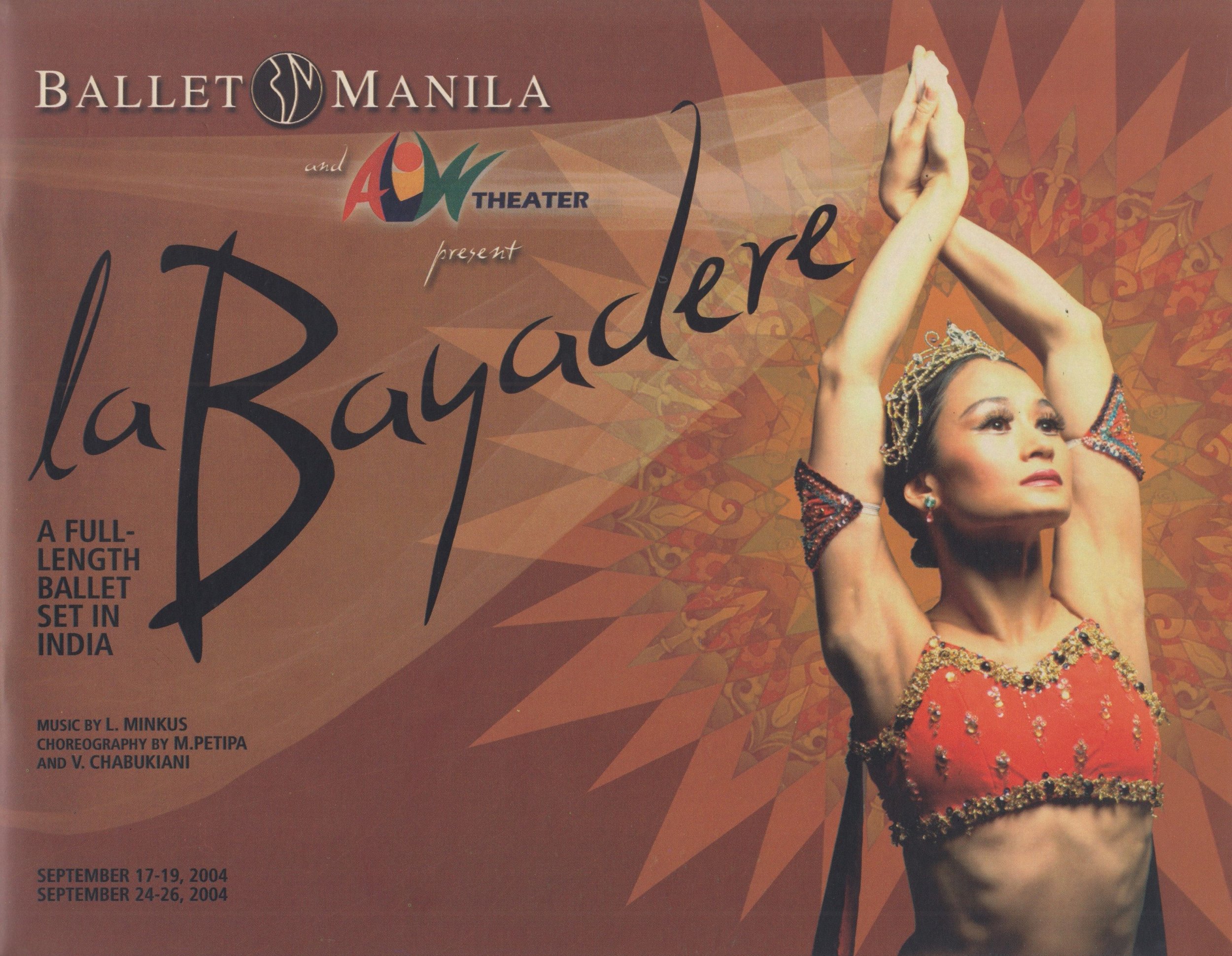
La Bayadere was first presented by Ballet Manila in 2004 with Lisa Macuja Elizalde as Nikiya. The company is now among the few in world that can present the full-length ballet considered the most demanding among the classics.