Artistry and magic in ‘La Bayadere’ as Mariinsky Ballet’s Renata Shakirova and Kimin Kim perform anew with Ballet Manila
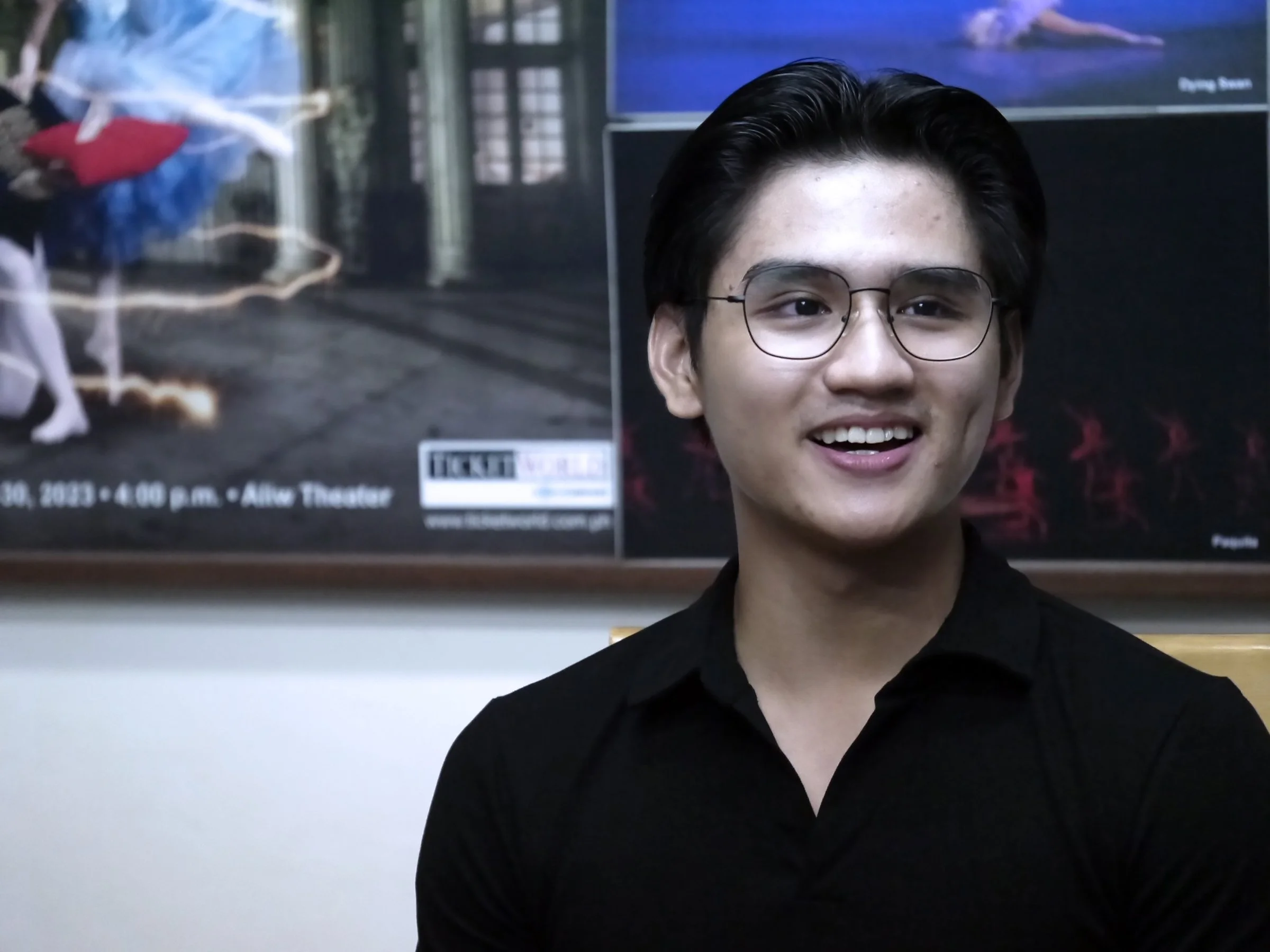
Ballet Manila artistic director Lisa Macuja Elizalde (middle) has a kinship with guest artists Kimin Kim (left) and Renata Shakirova. She was once a soloist of Russia’s famed Kirov Ballet, now known as the Mariinsky Ballet where the two are principal dancers.
By Leah C. Salterio
Thirteen years have passed since Ballet Manila last staged La Bayadere, a story of love, betrayal, murder, mystery, fate, vengeance and justice.
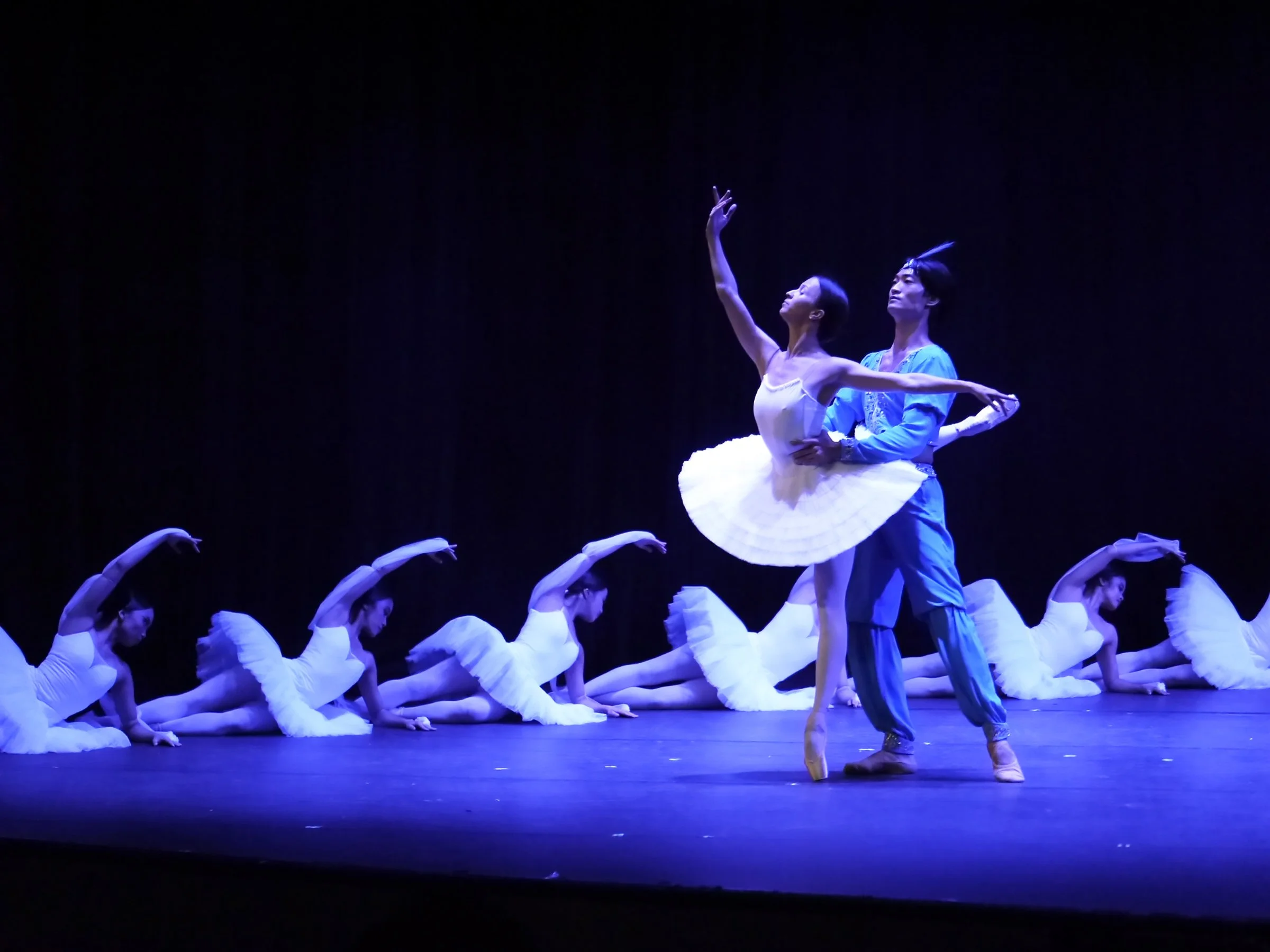
La Bayadere brings together Mariinsky Ballet superstars Renata Shakirova and Kimin Kim and Ballet Manila in a rare showcase of shared artistry and exceptional dancing. Photo by Giselle P. Kasilag
The woman at the heart of Ballet Manila’s journey for over three decades who continues to champion classical ballet – prima ballerina and artistic director Lisa Macuja Elizalde – cannot be any prouder that Mariinsky Ballet luminaries Renata Shakirova and Kimin Kim will headline the return of La Bayadere. The pair will take centerstage at Aliw Theater in three shows of the ballet classic tonight (August 14, 8 p.m.), and on Saturday (August 15, 5 p.m.) and Sunday (August 16, 5 p.m.).
“We are incredibly happy to welcome back two extraordinary international artists who will once again share the stage with Ballet Manila. Their artistry and technical brilliance will undoubtedly make this production even more special,” said Macuja Elizalde at a media conference last Wednesday.
Underscoring the importance of La Bayadere, she pointed out, “It is one of the greatest classical ballets that has everything audiences look for in a theatrical experience – love, passion, betrayal, tragedy, death, beautiful music, magnificent costumes and extraordinary dancing. And of course, there is the legendary Kingdom of the Shades. It is one of the most beautiful and challenging scenes in the entire classical ballet repertoire.”
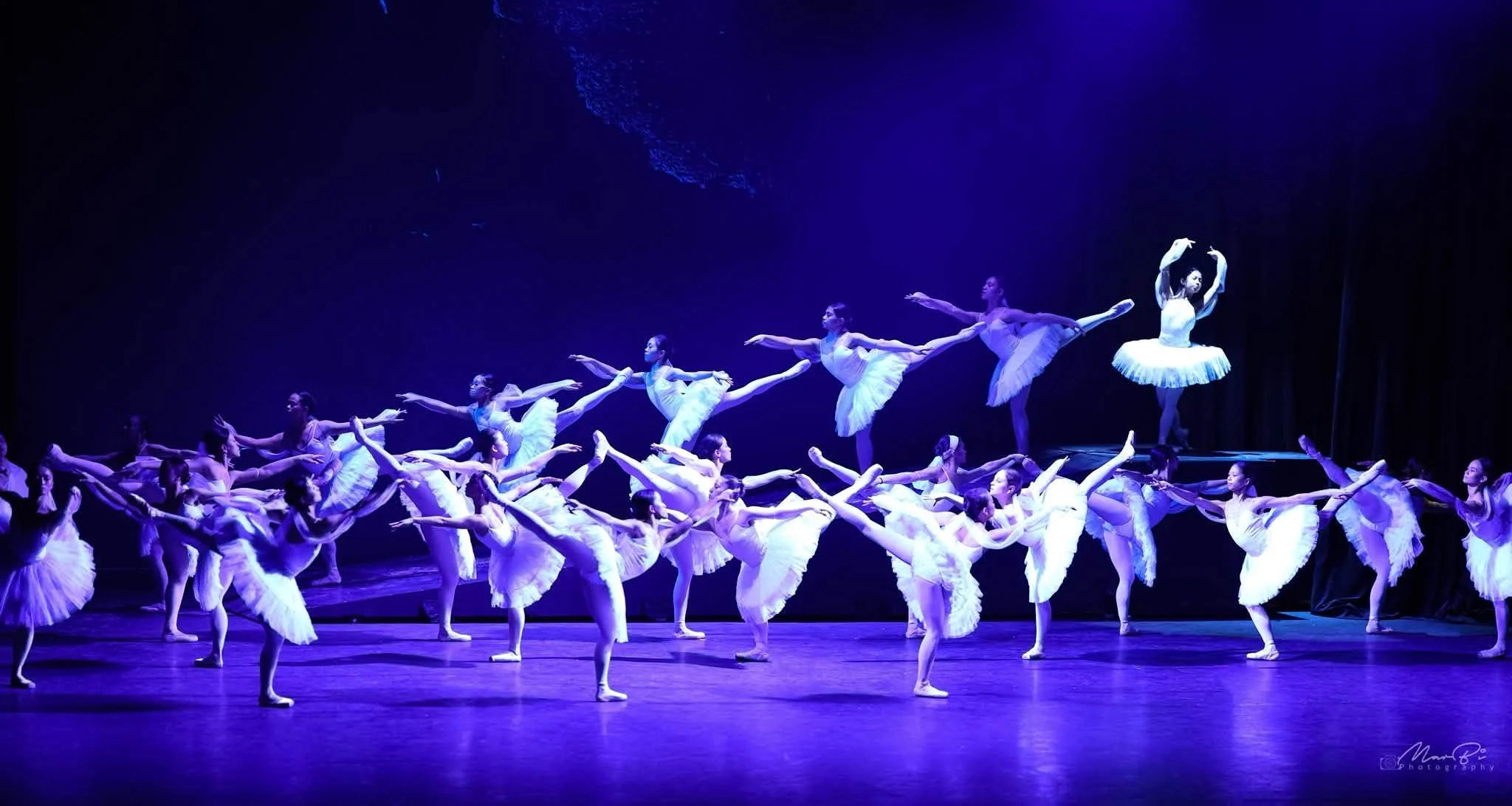
The Kingdom of the Shades, as Act 3 of La Bayadere is called, features a procession of ballerinas executing the same steps as they go down a ramp, highlighting strength, precision and grace. Photo by MarBi Photography
Set in ancient India, La Bayadere tells the tragic story of the temple dancer (bayadére) Nikiya and the noble warrior Solor. The two swear love for each other before the sacred flame. But Solor, chosen by the the Rajah to marry his daughter Gamzatti, turns his back on his vow. After the Rajah’s plot to get rid of Nikiya succeeds, the devastated Solor retreats into a drug-induced state where he reunites with his departed beloved.
When asked what audiences will feel when they watch La Bayadere, Kimin delivered his answers in English, while Renata spoke in Russian, which was translated by Macuja Elizalde.
“It's not an easy ballet because they're recalling a really high-quality technique and really deep, emotional dramatic passion,” Kim said. “I already danced La Bayadere so many times, since I was 17. That was my first La Bayadere at the Universal Valley Theater in South Korea. But that’s already more than 15 years. It’s one of my favorite, favorite ballets.”
The princess Gamzatti (Abigail Oliveiro, left) summons Nikiya (Renata Shakirova) to the palace to confront her rival for Solor’s affection. Photo by Giselle P. Kasilag
The Korean-born danseur added, “Ballet, which I really love, is always staged in theater. When an overture starts, I think all audiences feel the same like me. Almost in all ballets, especially La Bayadere, music says everything. You don't have to understand because the music says everything. When you play music, there's so many different feelings in one moment.”
Shakirova said, “I can also speak of when I watched the ballet, when I was a young girl. For me, it was a discovery of a new world. The ballet opened up a completely different world for me. And this magic, this kind of different reality, was just opened to me. This new world was discovered by myself.”
Kim and Shakirova landed in Manila at 2 in the morning on Wednesday, had a few hours of rest and immediately started rehearsals for La Bayadere at Aliw Theater that afternoon.
Lisa Macuja Elizalde says goodbye to Nikiya in La Bayadere as part of her Swan Song Series in 2013. Photo by Ocs Alvarez
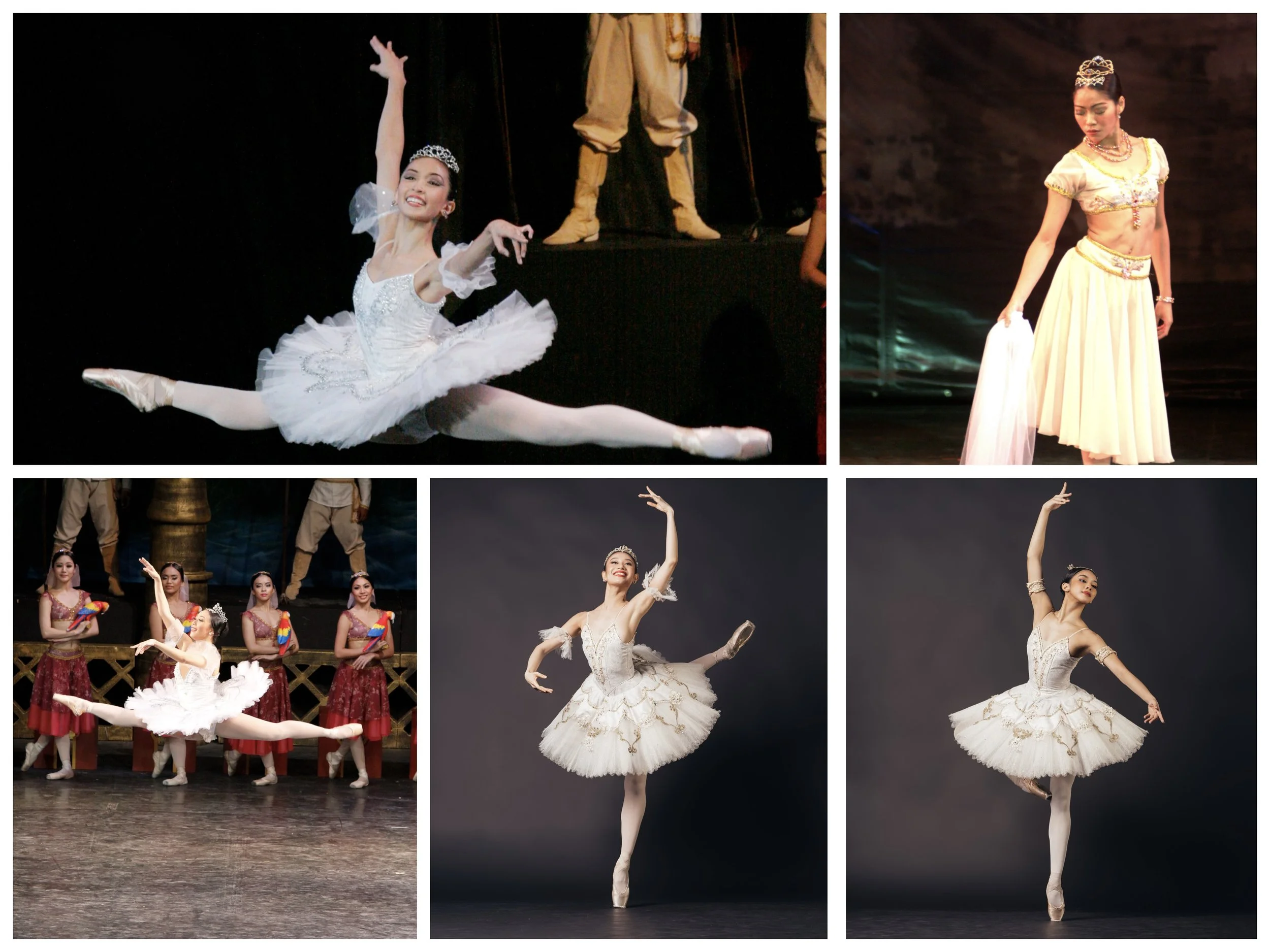
“Bringing back La Bayadere today feels both exciting and meaningful,” said Macuja Elizalde who portrayed Nikiya for the last time in 2013 as part of her Swan Song Series. In her dancing career spanning more than three decades, she had the opportunity to dance as Nikiya, Gamzatti and one of the Lead Shades which is why, she said, she knows the ballet “inside out.”
What makes this particular staging of La Bayadere – the fourth for Ballet Manila – extremely noteworthy for her is the guesting of Shakirova and Kim with whom the artistic director shares a bond. “They both come from the company I started in 42 years ago,” disclosed Macuja-Elizalde who became a soloist of the then named Kirov Ballet. “I was there for two seasons. Coincidentally, La Bayadere was the last ballet I watched before leaving Russia. It’s very sentimental for me. Full circle. Today, it's so gratifying to have my company, with the corps de ballet, performing La Bayadere.”
While La Bayadere has many highlights, Macuja Elizalde singles out Act 3 as an unforgettable ballet moment. “The Kingdom of the Shades is basically Solor's dream. He dreams many, many different Nikiyas in front of him. The beauty of the Kingdom of the Shades is that it's a white ballet on a dark, dark background,” she noted.
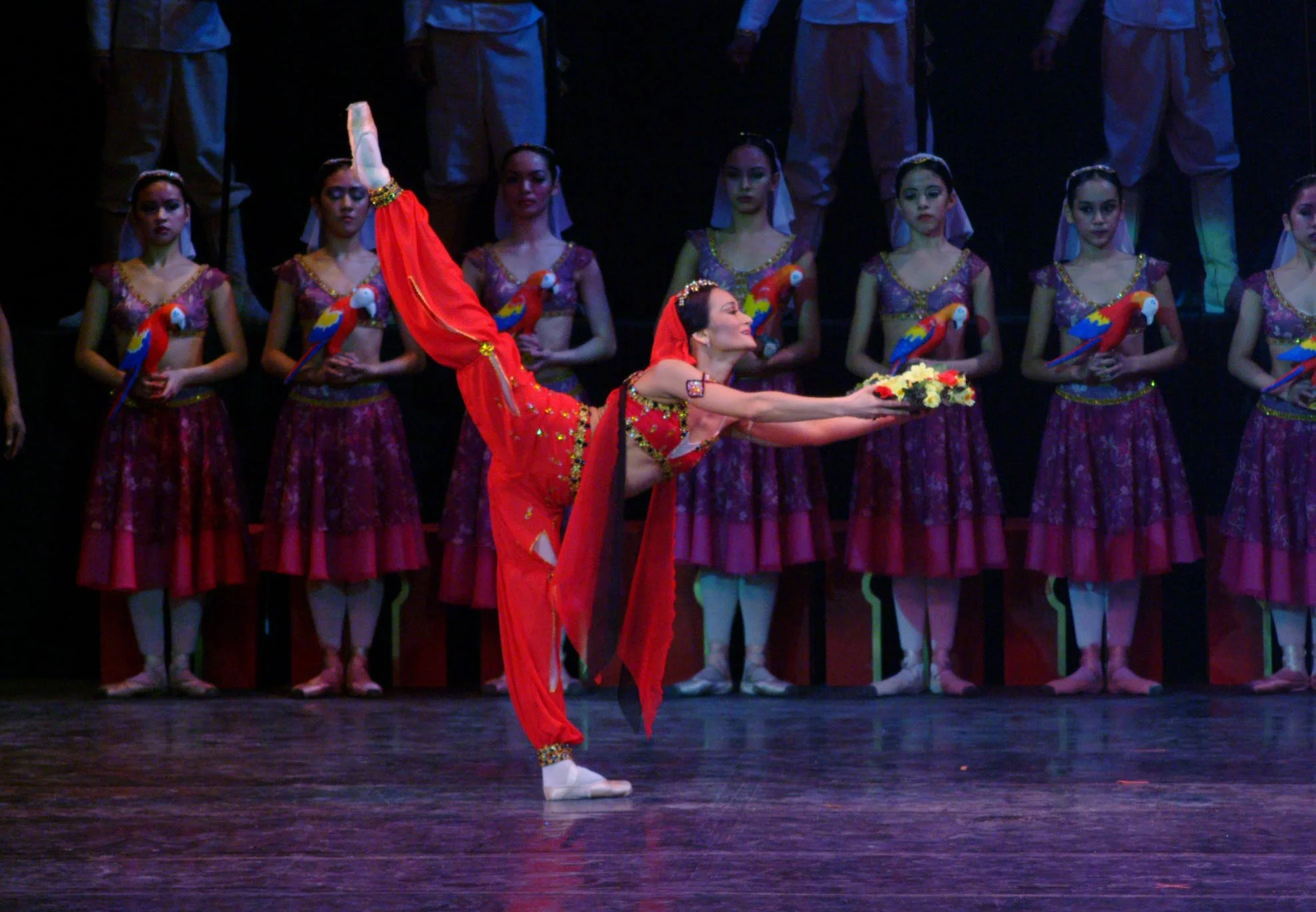
The temple dancers join the High Brahmin (Mark Sumaylo) in worship at the sacred flame, one of the scenes in La Bayadere which Ballet Manila is staging for the fourth time. Photo by Giselle P. Kasilag
She further described what makes the scene remarkable, “Especially when you see the ballerinas going down the ramp, they’re like floating ballerinas coming down. And the beauty of the repetition, all they do is arabesque and back bend, one after the other. But with that precision and grace, with the almost military-like march of the ballerinas going down and almost endless ballerinas. It's like… when it is going to end? But it's so simple and so magical.
“What really makes the Kingdom of the Shades stand out as a corps de ballet piece, it’s one of the most difficult group ensembles to dance. And there's only one guy, Solor. For me, it’s one of the most difficult white acts performed not just by the soloists and principals, but by the corps de ballet. The control that one needs for the first adagio, the amount of control that you need to dance slowly, but beautifully. It's just magic. And thinking that this is all going on in Solor's dream. It makes the whole act very dreamlike. I think it's just iconic of the choreography of La Bayadere. It's irreplaceable,” gushed Macuja Elizalde.
To make the magic happen, the key element is having a formidable corps de ballet which Ballet Manila has become known for. “The corps de ballet has to be very strong. As audiences watch the Shades slowly descend onto the stage one after the other, in perfect harmony and precision, it is an experience that stays within you long after the curtain falls. But this production is not simply about recreating a great, classical ballet. It is also about bringing together generations of artists.”
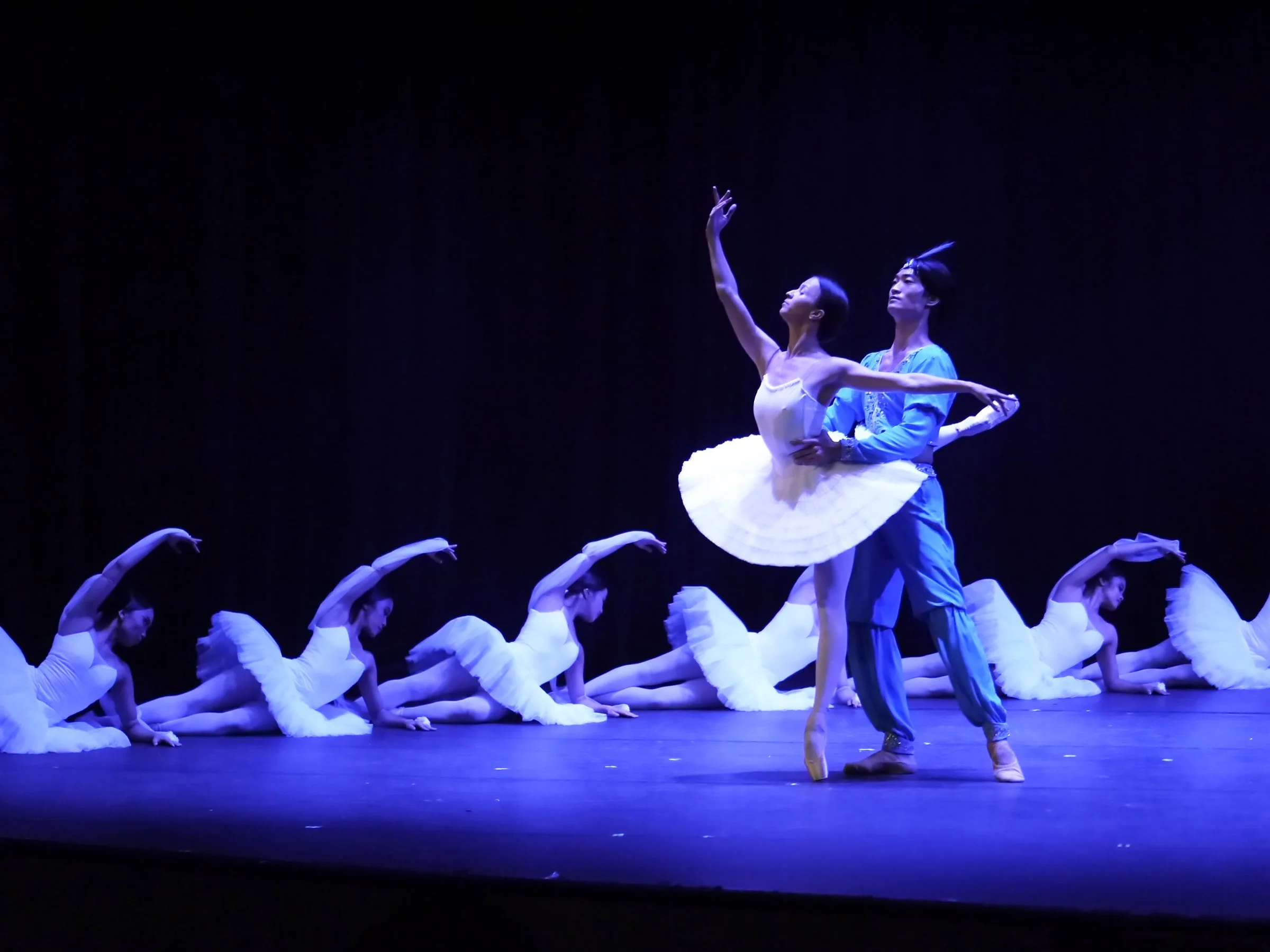
Nikiya (Renata Shakirova) and Solor (Kimin Kim) perform the scarf dance as they reunite after tragedy strikes in La Bayadere. Photo by Giselle P. Kasilag
Macuja Elizalde cited the work that ballet mistress Natalia Radulgina and ballet master Alexander Kurkov have put into restaging and rehearsing La Bayadere. “They really whipped the company into shape to be able to perform this ballet. They gave so much to the style, the precision, the musicality, the technique, the beauty and the artistry.”
She is especially proud that La Bayadere has given Ballet Manila dancers an opportunity to take on some of the most demanding roles in the classical repertoire.
“For me, this is what a ballet is ultimately about,” Macuja-Elizalde added. “Not only about preserving the great works of the past, but giving our dancers today the opportunity to grow, to challenge themselves and to carry the art form forward. Every production is a conversation between tradition and the present.”
She stressed, “With La Bayadere, we hope to honor the classical tradition while allowing our dancers to bring their own artistry, energy and passion to the stage.”
Ballet mistress Natalia Radulgina and ballet master Alexander Kurkov restaged and rehearsed La Bayadere, whipping the company into shape to be able to perform the ballet classic. Photo by MarBi Photography