
Romeo Peralta is grateful to put on his villain cap again for Lisa Macuja Elizalde’s ‘Paquita’
Romeo Peralta Jr. (rightmost) performs as Iñigo to Mark Sumaylo’s Lucien and Abigail Oliveiro’s Paquita at the media conference for the ballet. The three principal dancers have had to adjust following cast changes resulting from a colleague’s injury.
By Jv Ramos
“Being a villain is not a new territory for me,” begins principal dancer Romeo Peralta Jr., who will be playing Iñigo, the leader of the gypsies, in all shows of Lisa Macuja-Elizade’s Paquita. Clearly relaxed and ready to dance his character in this new production, this seasoned danseur and father of three notes that while he’s performed other bad guys including Tybalt in Romeo and Juliet and Birbanto in Le Corsaire in the past, it would be a mistake to think that all antagonists are the same.
Principal dancer Romeo Peralta Jr. assumes the cloak of a villain once more as he plays Iñigo in Lisa Macuja Elizalde’s full-length Paquita. Photo by Giselle P. Kasilag
“Iñigo is not like Adolfo in Florante at Laura, whom the author Francisco Balagtas wrote as a character with pure hatred. He’s also not like Don Diego in Ibong Adarna, whom you could tell hates his brother. Iñigo wasn’t written to be a very bad villain – maybe this is because it’s a classical ballet – and as the dancer of Iñigo’s character, I’d have to make that seen.”
So who is Iñigo then for Romeo? Our subject replies that more than being the leader of the gypsies, this villain is used as a tool. “The Spanish governor uses him to carry out his plan of killing Lucien, the son of the general and the man who’s in love with Paquita… I also wouldn’t say that Iñigo is in love with Paquita. His relationship with her is more like… I want her to dance, because the more she dances, the more money I earn.”
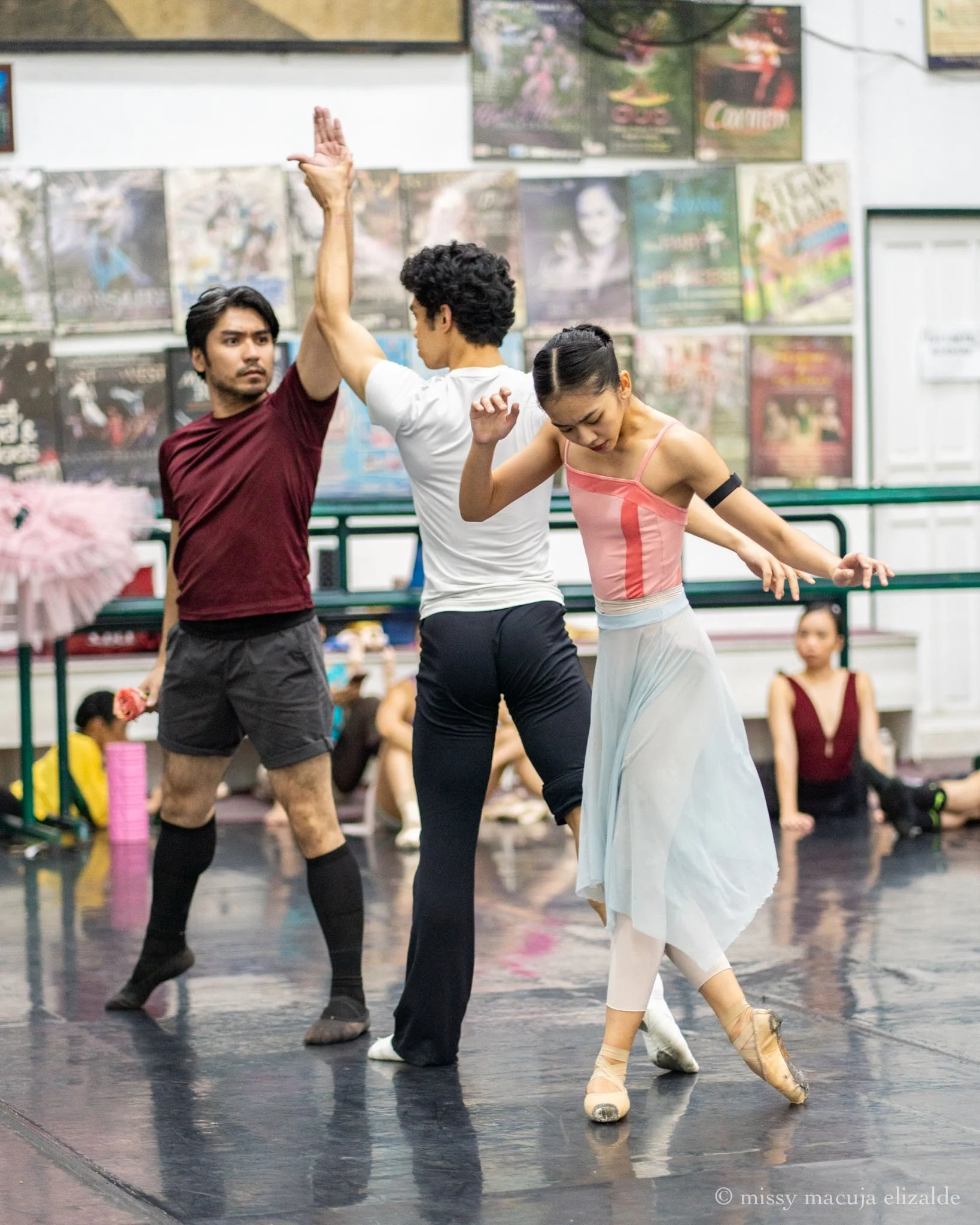
Romeo rehearses with the younger pair of dancers, soloists Jos David Andes and Shamira Drapete, who are dancing their first full-length ballet together as Lucien and Paquita. Photo by Missy Macuja Elizalde
Asked how he’s been preparing for this not-very-evil villain then, Romeo expresses that being present in daily classes is an essential part along with keeping in mind the importance of telling a story. “Since Paquita is a story ballet, you need to act, show emotions that would make the audiences get the story. So it’s not just about learning the new choreography and getting the technique right, you have to work hard on making sure that the audience gets the story.”
As the traitorous Adolfo in Florante at Laura (2024), Romeo casts a formidable figure. Photo by Erica Marquez-Jacinto
Romeo reveals that blending acting and emotions with technique could be tricky in the sense as it could change how one initially envisioned his character to move, but that part of a dancer’s life is knowing how to develop the character one plays. “You have to figure out what works and what doesn’t in every rehearsal you go through… As Iñigo, I also look into the small details, such as how I look at Paquita, since we have a complicated relationship. I also look at Lucien differently because there’s friction between our characters.”
The principal dancer adds that for artistic storytelling to come out, everyone in the cast should be participative in reacting to one another. “Batuhan ng energy” is how Romeo sums it up. “With Abi (Abigail Oliveiro) and Mark (Sumaylo) as Paquita and Lucien, this is easy to achieve because we have danced together for so long, and even have even been in story ballets where they were the lovers, and I was the villain. I guess we three have developed a process that already works for us that we give off and respond to each other’s energy naturally.”
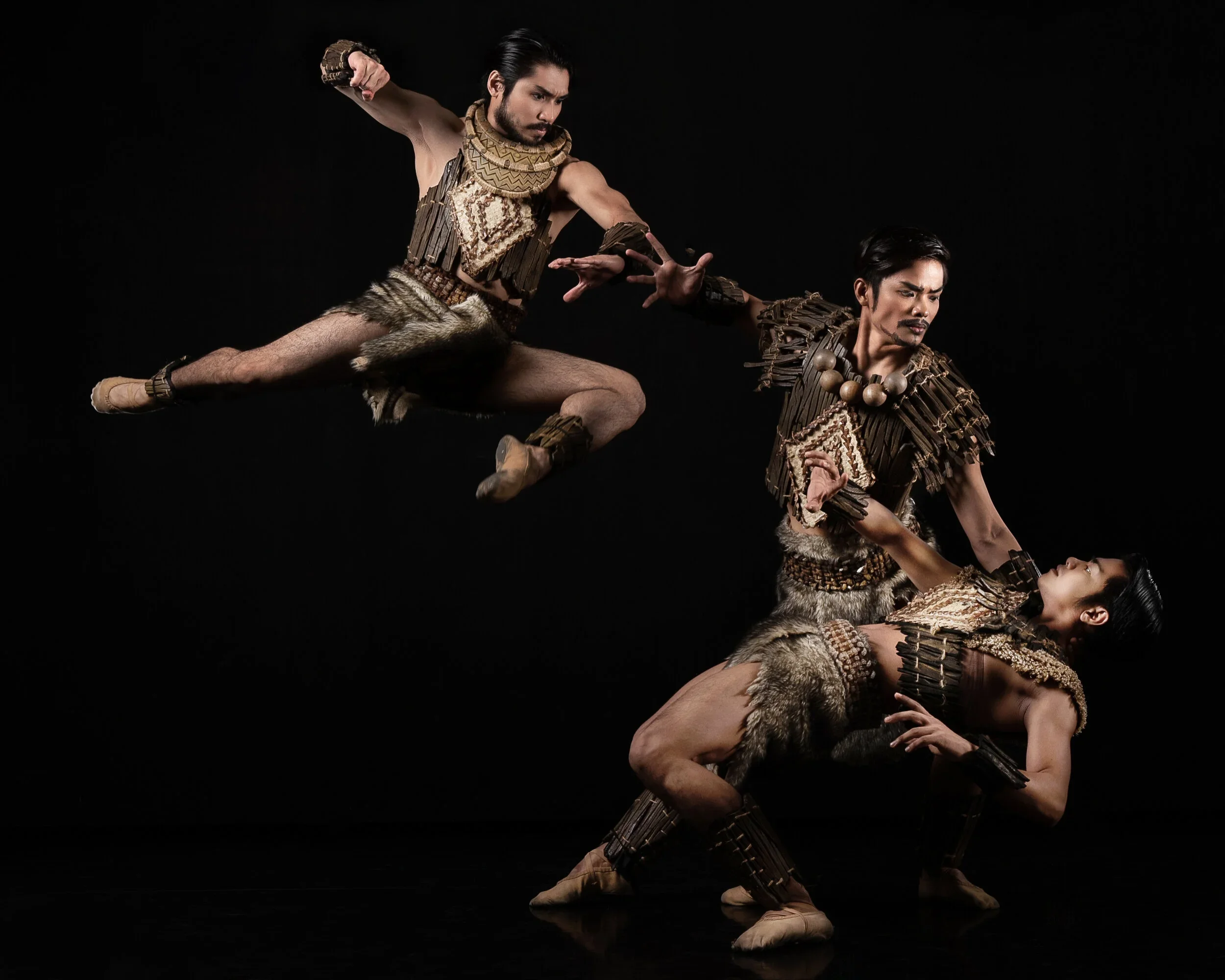
Romeo (leftmost) was the devious second prince, Don Diego, in Gerardo Francisco Jr.’s Ibong Adarna. Seen with him in this pictorial shot from 2020 are Elpidio Magat Jr. as Don Pedro and Anselmo Dictado as Don Juan. Photo by MarBi Photography
As for the cast with young soloists Shamira Drapete and Jos David Andes, Romeo comments, “I am nothing but blessed to be dancing with them or the Iñigo to their Paquita and Lucien.” He explains that as a senior dancer, he always wants to play a role in developing the next generation of Ballet Manila dancers. “I’ve always had a desire to help younger dancers find their characters and find their way in the company, and being in a classical ballet with them is one of the ways I can contribute to that.”
For Romeo, if there’s anything he’d like young danseurs to master, it’s the practice of having the ballerina always appear as the star. “I ask my partner how she wants the character to be, how she wants to do things in partnering, and I adjust to her. I never ask the ballerina to adjust to me. As Sir Shaz [the late Ballet Manila co-artistic director Osias Barroso Jr.] would say, the ballerina is the star and you’re the one supporting her. And as a danseur, you’d have to learn how to do this for every ballerina because every dancer is just different.”

Between rehearsals, Romeo squeezes in some tasks as part of his simultaneous responsibilities as Ballet Manila’s company manager. Photo by Missy Macuja Elizalde
Equally important for Romeo is always being ready for anything and being quick to learn a professional dancer. “Many things could happen between the day the company starts learning the choreography of a new ballet and its performances, and every member of the company has to be ready for those changes.” In the case of Paquita, the biggest curve ball was principal Joshua Enciso – who was supposed to have been Lucien – having to bow out of the production due to an injury three weeks before opening night. Mark Sumaylo, who was originally cast as Iñigo, therefore became Lucien to Abigail Olivero’s Paquita, with Romeo being assigned as the villain to both casts.
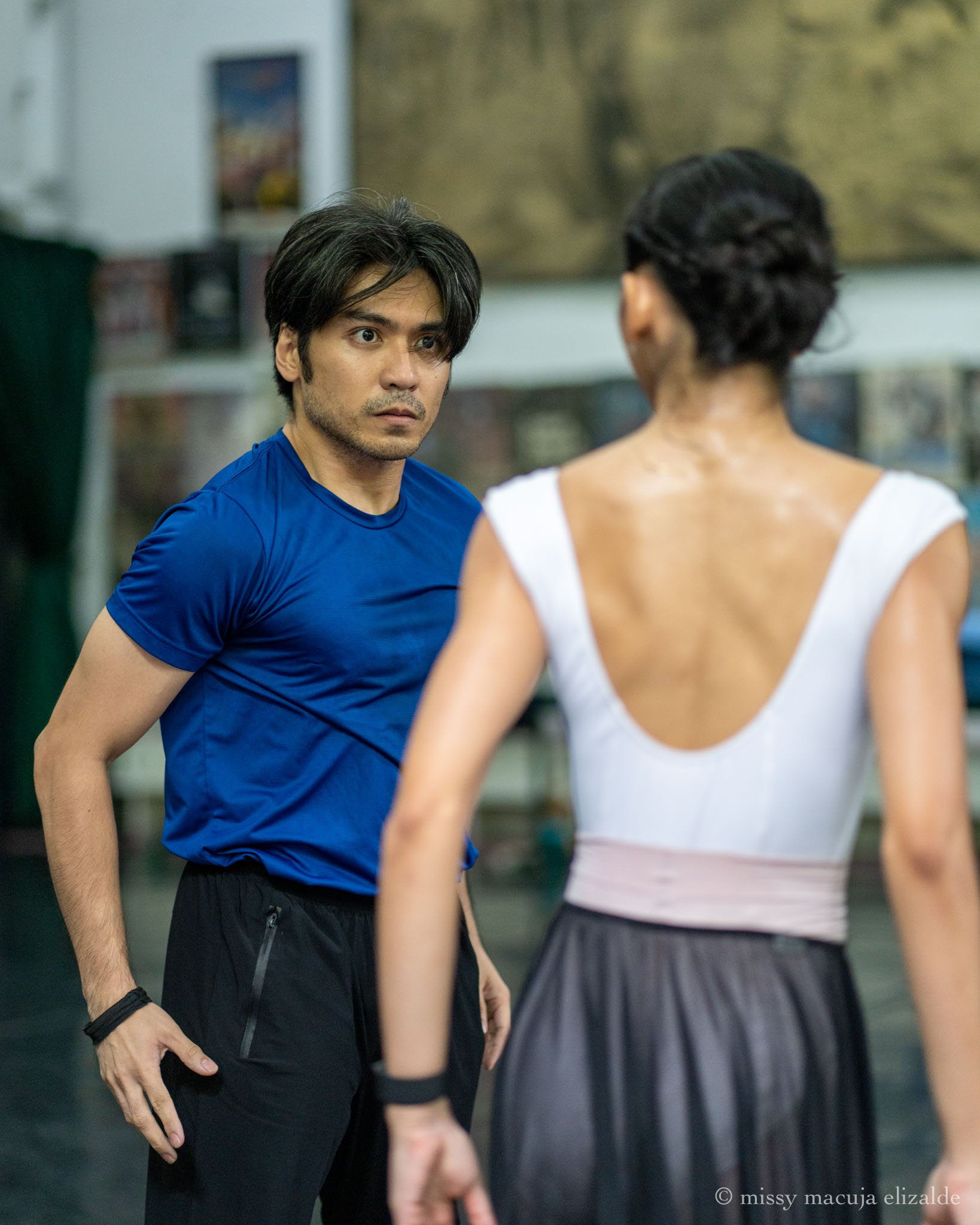
Romeo, seen here rehearsing with Shamira Drapete, underscores the importance of interaction among dancers, calling it “batuhan ng energy” (exchange of energy). Photo by Missy Macuja Elizalde
Romeo admits, “I didn’t picture that I’d be the villain in all the shows, but that’s just the way things can turn out in ballet. There will be times wherein you’re called suddenly to dance a certain character, and there will also be times when you’d have give up a role and let another dancer perform it, since that is what is best for the company.”
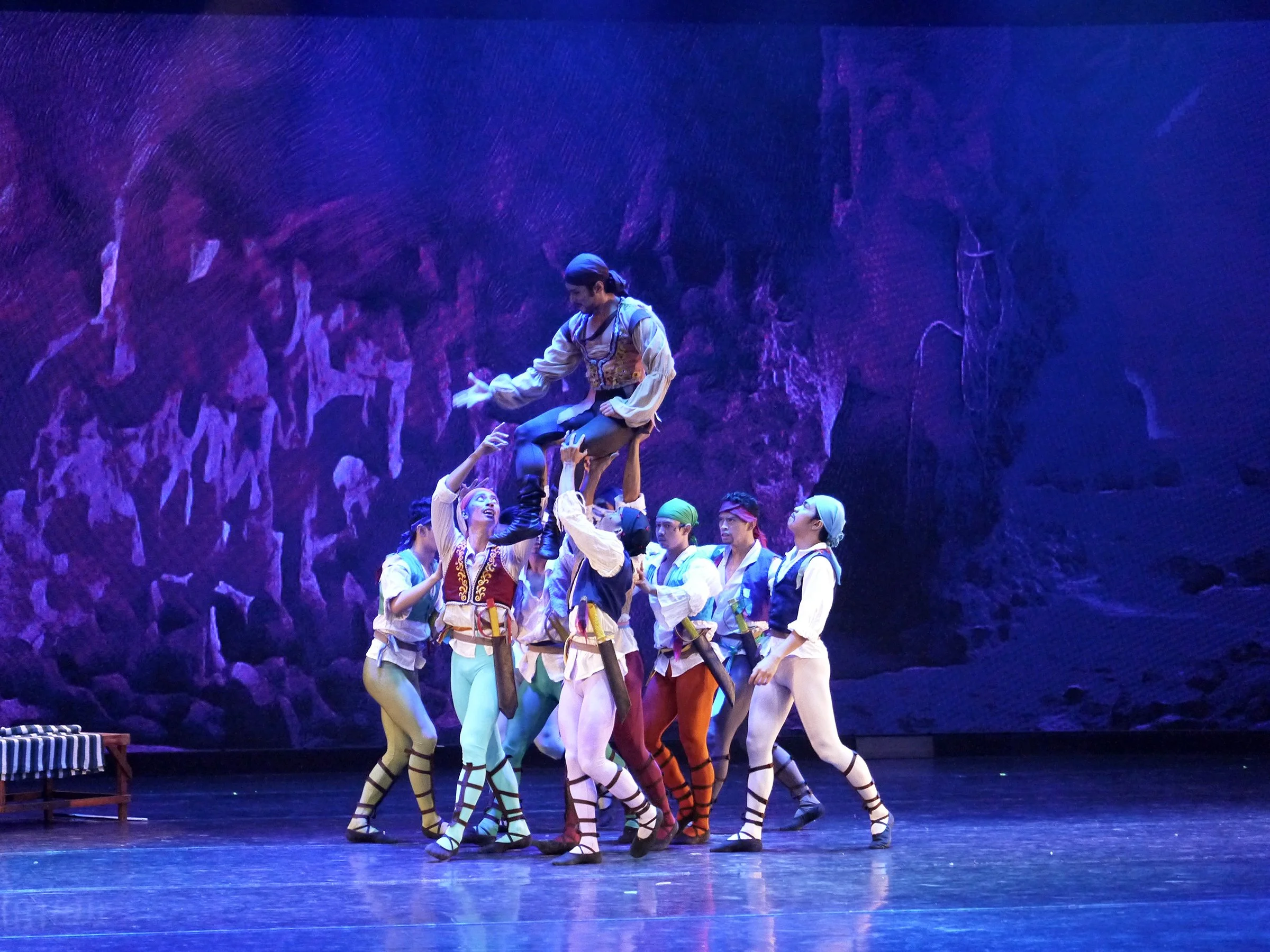
Le Corsaire has given Romeo the chance to take on assorted roles, from a lowly guard to the lead pirate. In 2023, he was the villain Birbanto. Photo by Giselle P. Kasilag
As someone who’s been with Ballet Manila for more than 20 years, Romeo himself has been through both situations, and in each case, the way for him to overcome the stress and workload is to look forward to the next thing. “Right now, aside from thinking about playing Iñigo to both casts, I am also already thinking about the next production, La Bayadere, in August. A part of my mind is already there because I’d like to be ready to dance that ballet, which many consider as the hardest classic to do.”
But of course, this “villain expert” is present in the rehearsals leading up to the premiere of the company’s first full-length version of Paquita. “It’s a very special ballet, and I’d have to say that everyone in the company, even Shamira and David who are partnering for the first time in a full-length, are ready to perform this. We’ve been working hard on learning our characters in this ballet and we’re ready to show it.”
Lisa Macuja Elizalde’s Paquita – the first full-length version of the ballet to be performed in the Philippines – will have its world-premiere run on June 19, 20 and 21, with an invitational gala on June 18, at Aliw Theater, Pasay City.
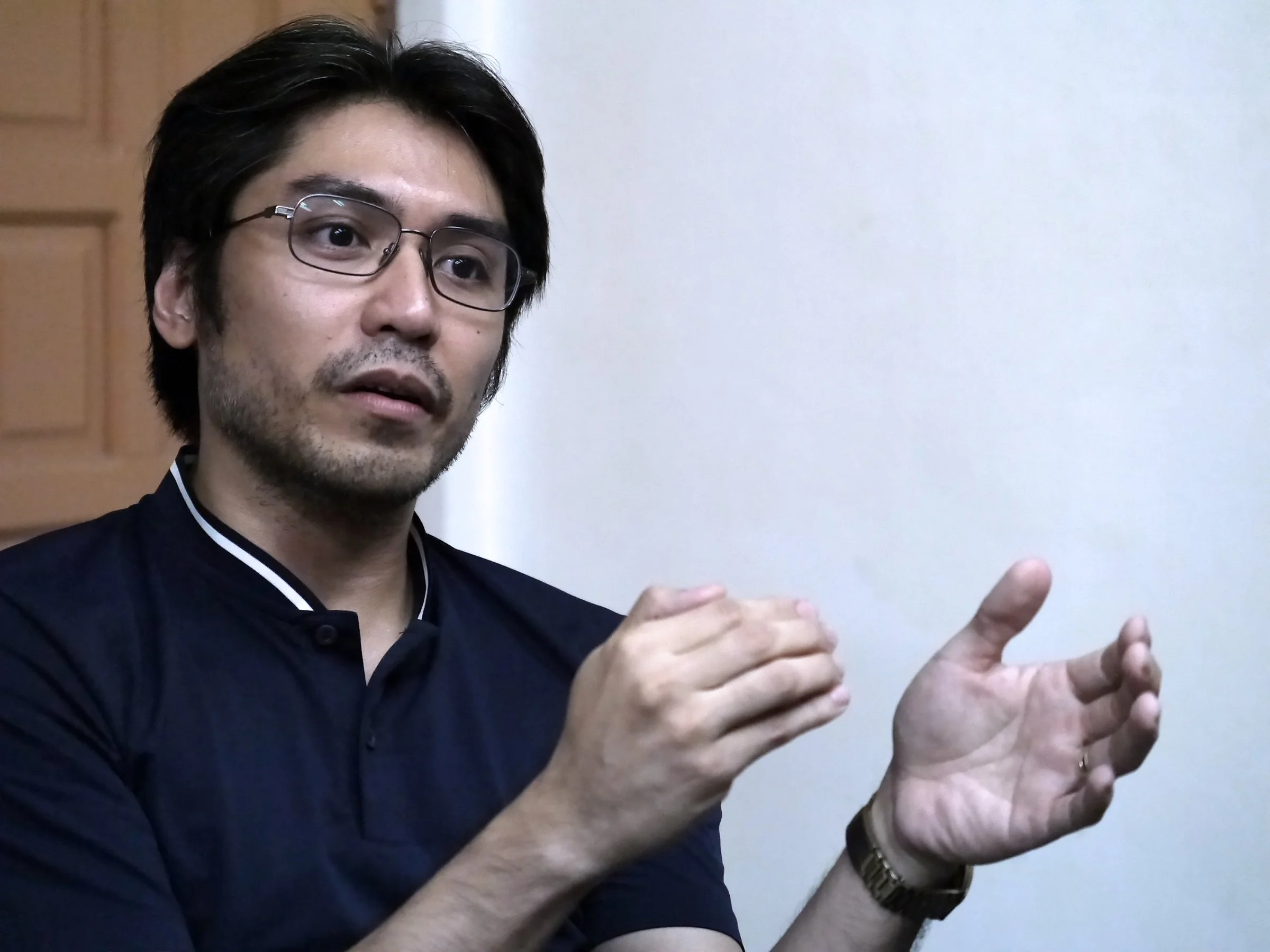
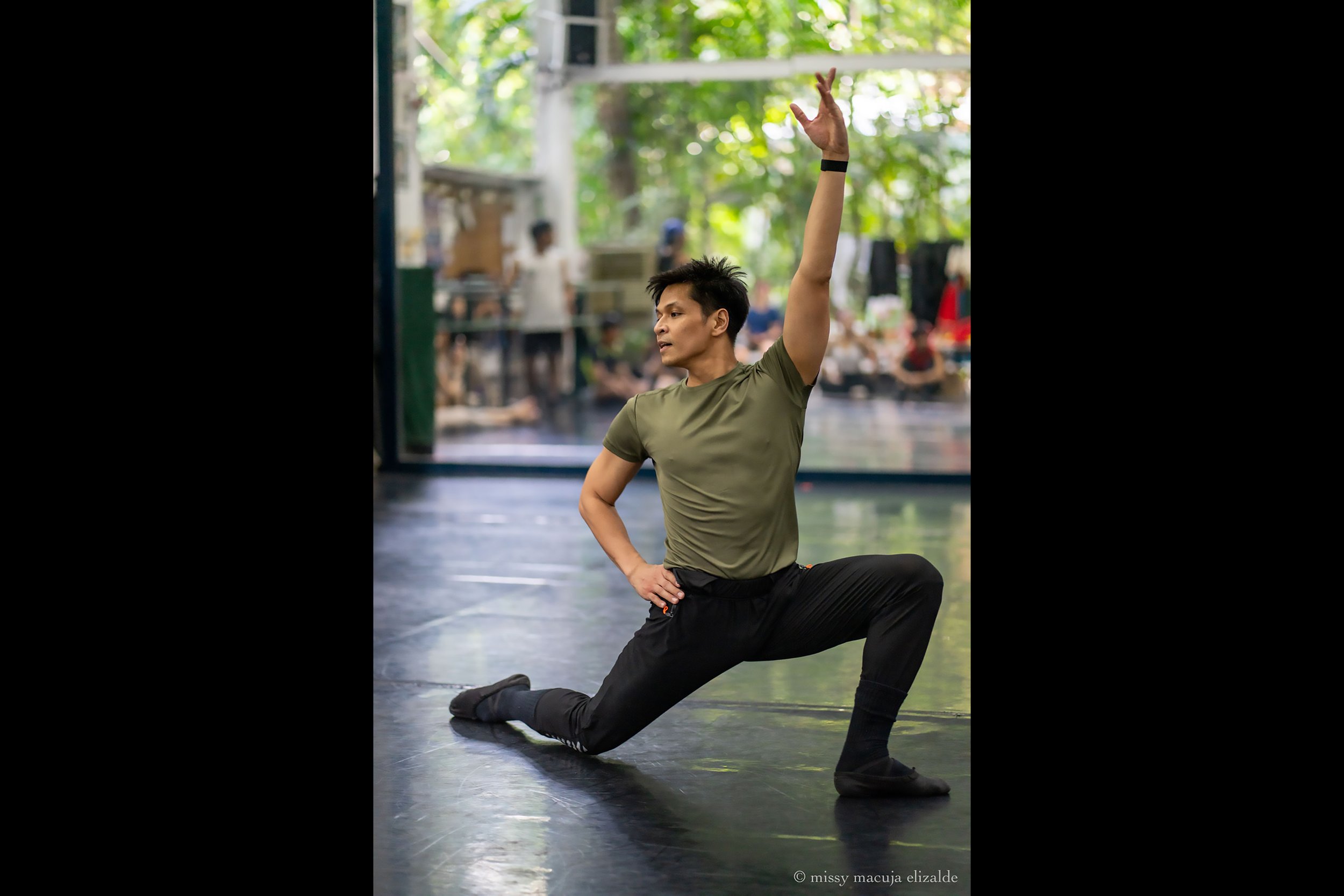
For Romeo, preparation for any role means being present in daily classes and keeping in mind the importance of telling a story. Photo by Giselle P. Kasilag