Why ‘Paquita’ is a must-watch
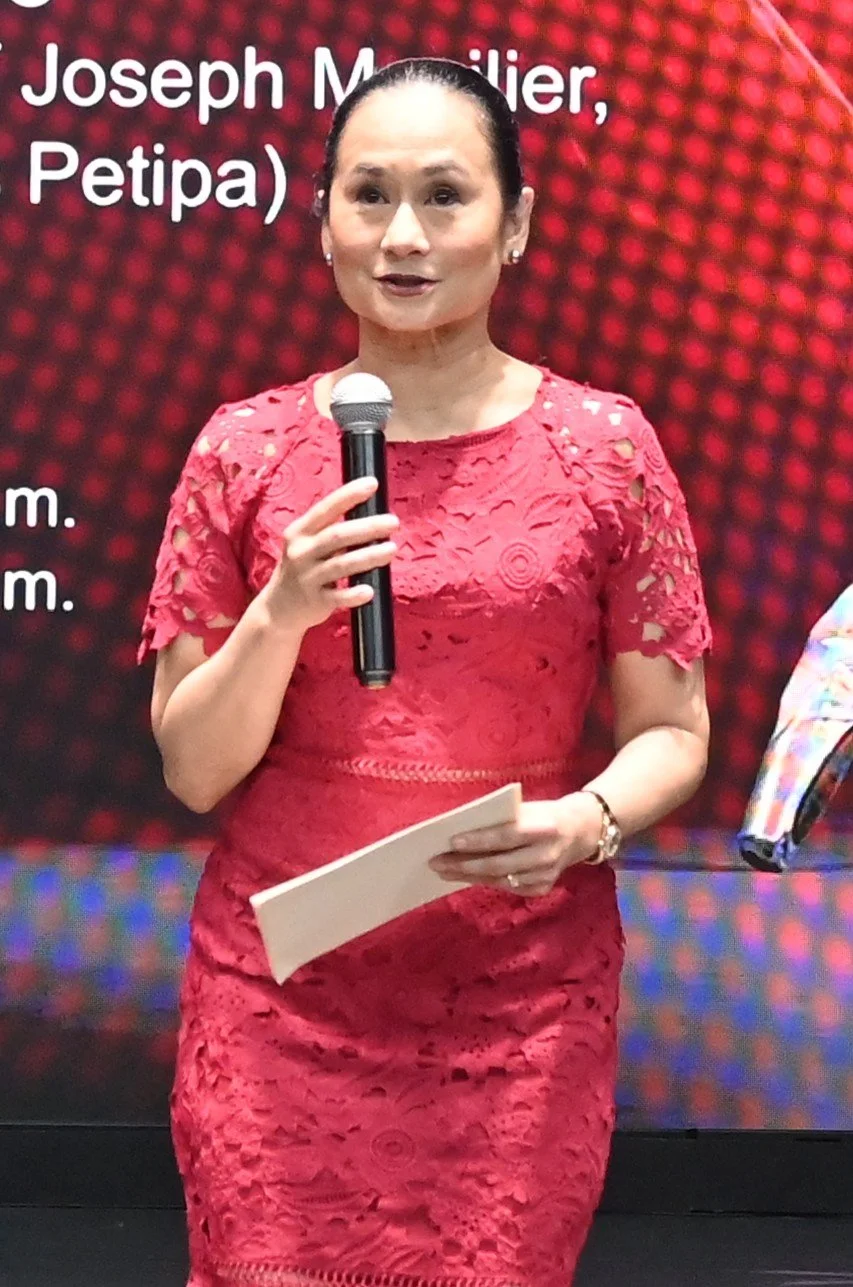
Ballet Manila artistic director Lisa Macuja Elizalde shares details about her choreography of Paquita, a full-length version of the famed divertissement that will be seen in the Philippines only for the first time.
By Leah C. Salterio
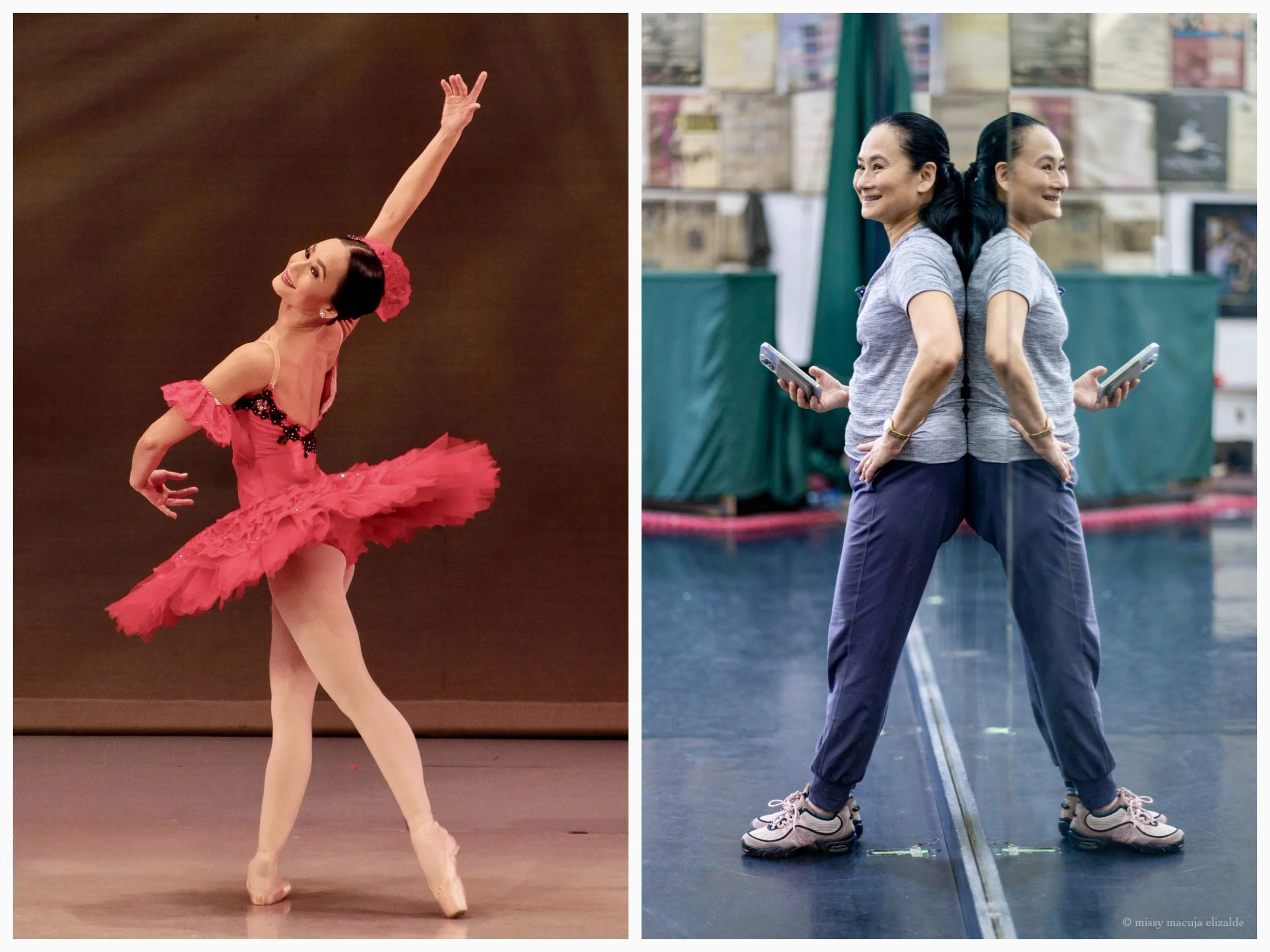
After dancing the lead in the ballet excerpt Paquita more than 60 times and staging it all over the country with Ballet Manila, prima ballerina Lisa Macuja Elizalde still wishes she could have performed its full-length version when she was still actively dancing.
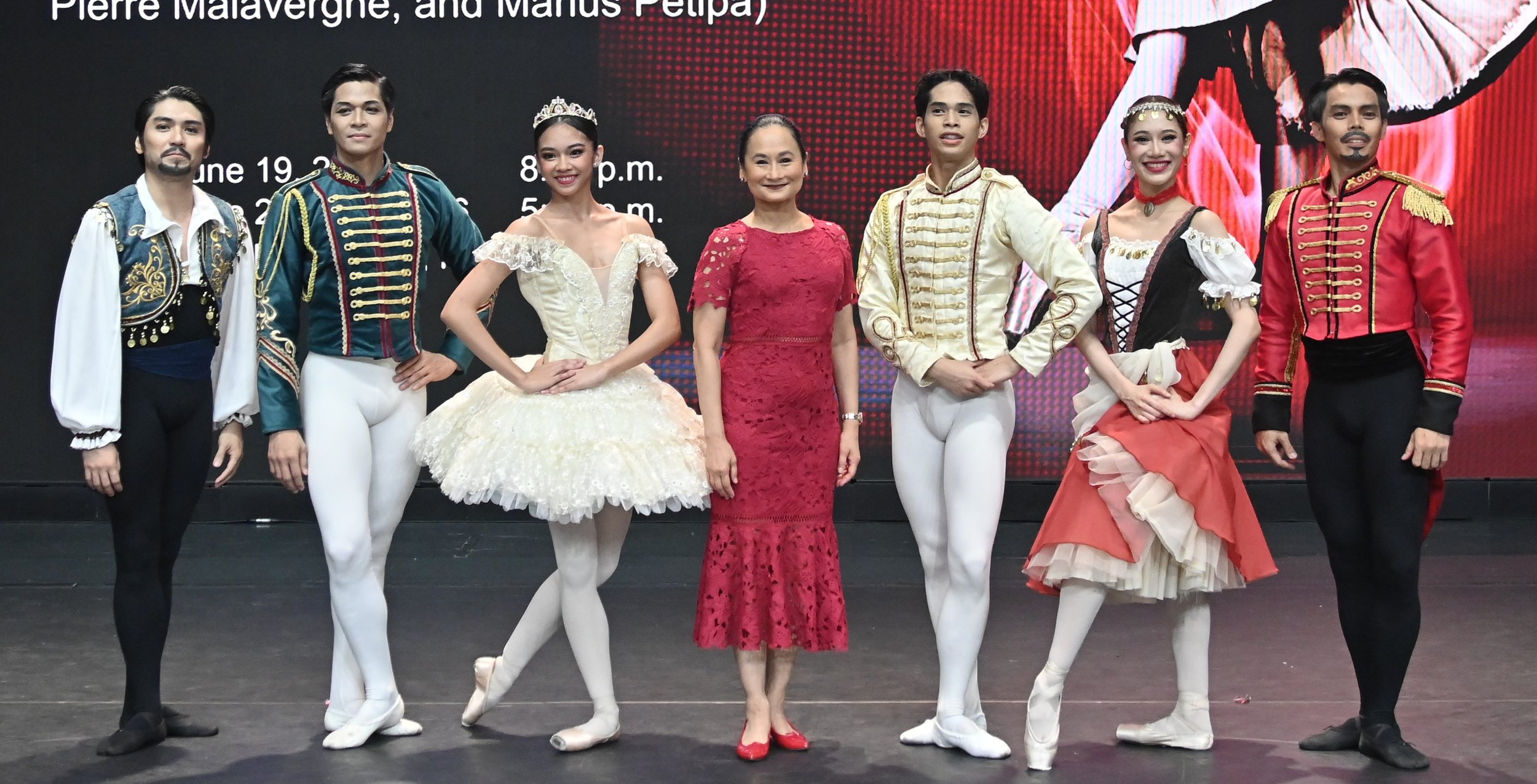
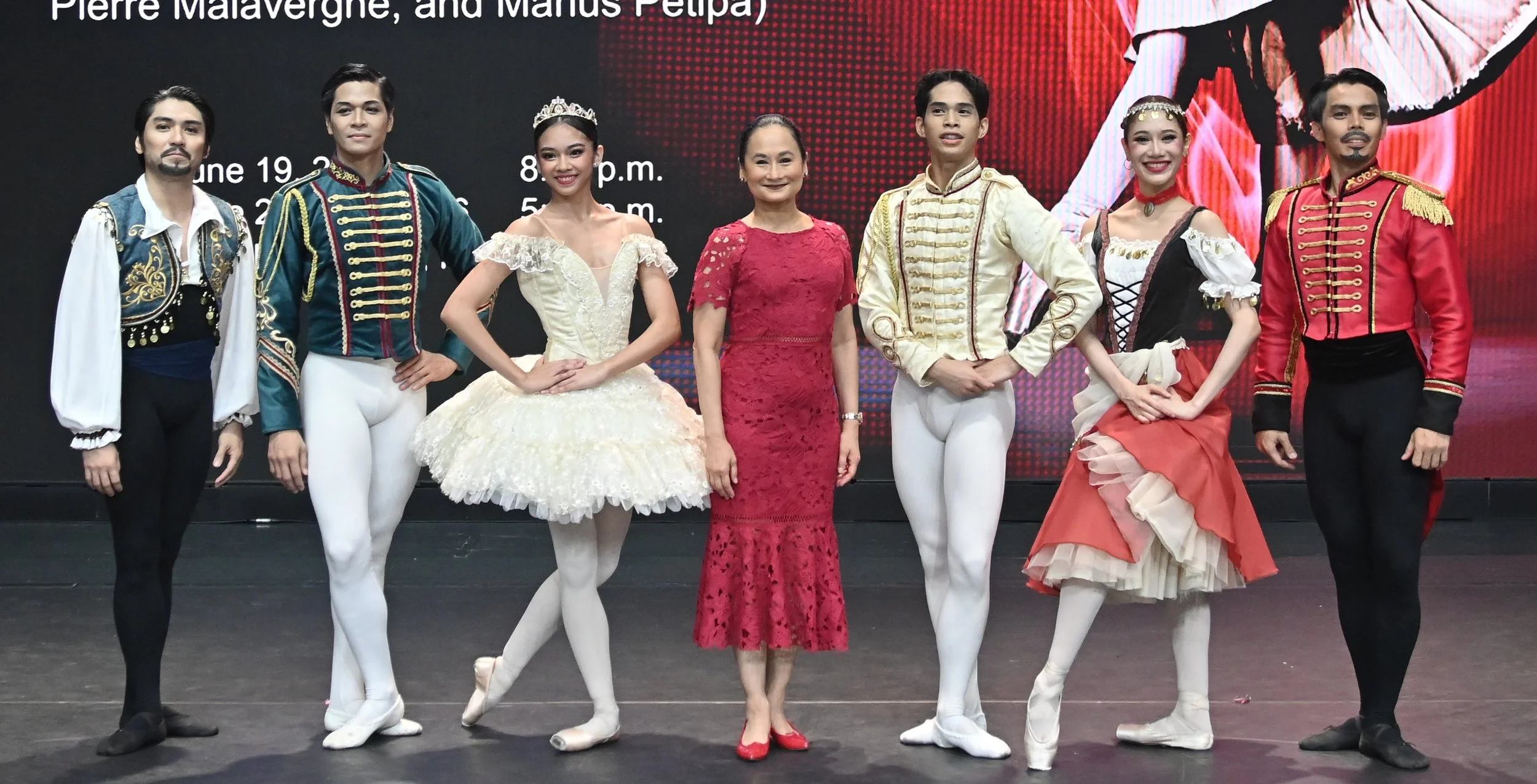
Paquita choreographer Lisa Macuja Elizalde (center) with the lead Ballet Manila artists who are bringing the story to life: (from left) principal dancers Romeo Peralta Jr. and Mark Sumaylo, soloists Shamira Drapete and Jos David Andes, principal dancer Abigail Oliveiro and soloist John Ralp Balagot
But the artistic director and chief executive officer of Ballet Manila has done the next best thing – choreograph her own version of Paquita, based on the originals created by Joseph Mazilier, Pierre Malavergne, and Marius Petipa. Her work – which incidentally will be the first full-length version of the ballet that will be seen in the Philippines – will have its world premiere on June 19, 20 and 21, with an invitational gala on June 18, at Aliw Theater.
Through the years, only the divertissement of Paquita has been constantly performed on stage not just by Ballet Manila but by many companies all over the world. Depending on the version that one is watching, it is usually the culmination of Act 2 or Act 3.
Ballet Manila first performed the Paquita divertissement in its inaugural concert in 1995. Lisa last danced it in The Legends and the Classics, a show she headlined together with Lea Salonga and Cecile Licad in 2013. “It has the entrada, the adagio, the pas de trois, all the different variations and then the coda,” Lisa describes.
Because the full-length Paquita has become somewhat of a rarity, she had always wondered what it would be like to actually stage it. Ballet Manila’s ongoing Prima season – consisting of all-classical fare (Sleeping Beauty last March and La Bayadere in August) – seemed the perfect setting and timing to do just that.
We caught up with the artistic director at the press launch of Paquita and asked her to flesh out the elements that make this ballet a must-watch.
Teleserye story
Lisa wants people to know who Paquita is. For while the Paquita variations have become famous as competition pieces in international ballet contests, little is actually known about the character or her story.
Paquita is actually older than the more widely known Don Quixote, although the style of dancing is very similar as it’s a Spanish-inspired ballet. Lisa believes the ballet is quite amusing and perfect for the Filipino audience.
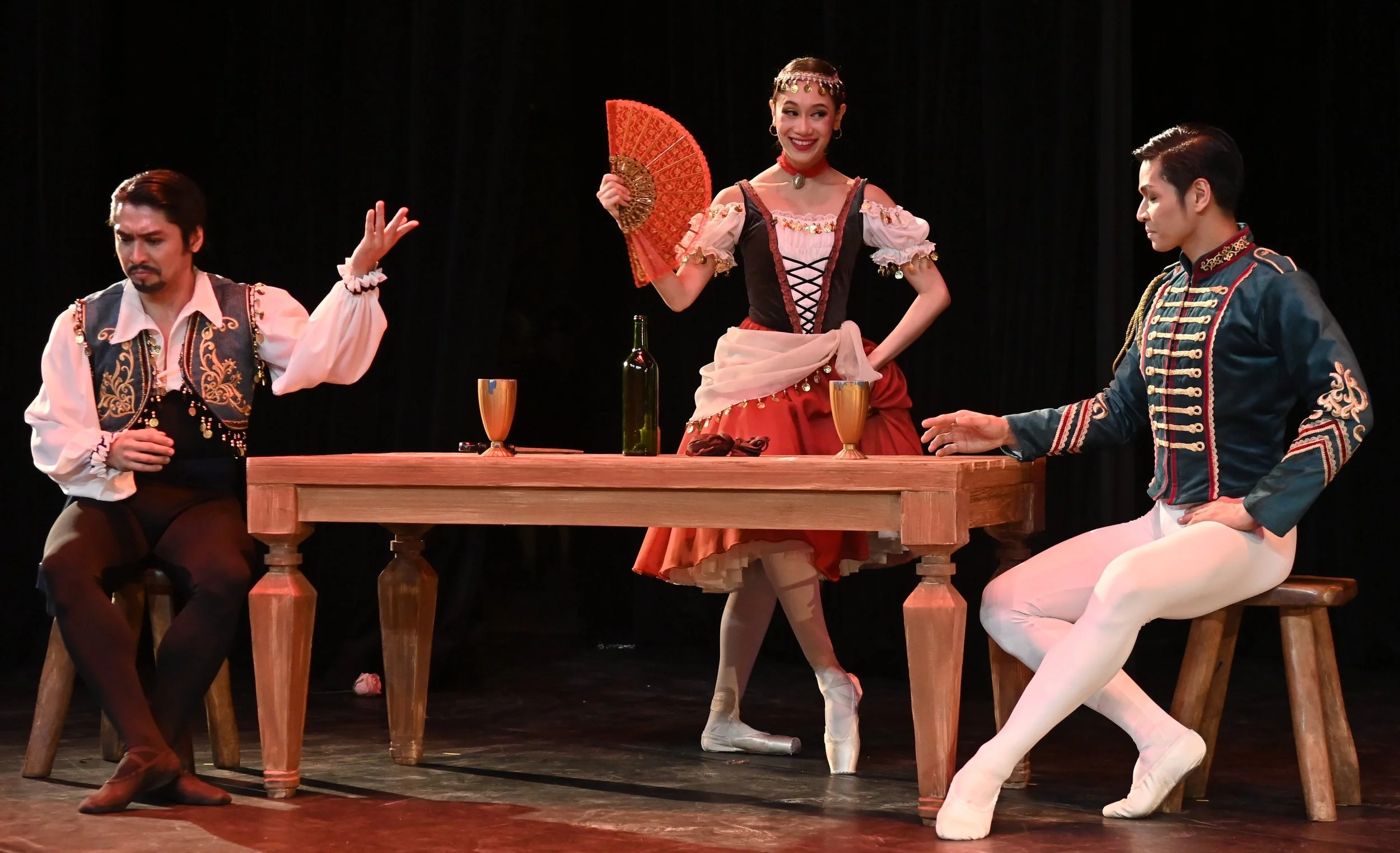
Principal dancers Romeo Peralta Jr. (the gypsy leader Iñigo), Abigail Oliveiro (the gypsy Paquita who is actually of noble birth) and Mark Sumaylo (the French military officer Lucien) perform an excerpt of Paquita at a media conference.
The story of Paquita hews closely to a teleserye, with twists and turns. “There’s murder, kidnapping, a love triangle, a rich boy-poor girl love story,” Lisa offers. “It can be quite comedic at times. But there will still be drama and lots of dancing! The story is similar to Giselle, but Paquita has a happy ending.”
For clarity of the story, Lisa also created an original prologue.
Everything new
Because the ballet is on its world premiere, everything is new – costumes, sets, music arrangement, lighting design, making it also a challenge for the production and creative team.
The stage design is being done by Lisa’s niece, Julia Macuja. Paquita is her first professional work after recently graduating from Ateneo, where she took up Theater Design and where she received awards for her theater work in the university.
The costumes in Paquita are done by Michael Miguel, the same designer who crafted the wardrobes in Cinderella and Snow White, both choreographies of Lisa as well.
Danceable music
Soloists Shamira Drapete and Jos David Andes are partnered for the first time in Paquita as Paquita and Lucien, backed up by Ballet Manila’s female corps.
The music of Paquita is not very famous, not very familiar. “But it's very danceable. It's very happy. It's very ‘dancey,’” says Lisa. “You basically just rediscover the music. It's really a happy ballet. So it's grand entertainment.”
Spectacular dancing
“I think the really important reason for the public to watch Paquita is because the dancing is spectacular,” Lisa emphasizes. “There are lots of tricks, lots of fireworks.”
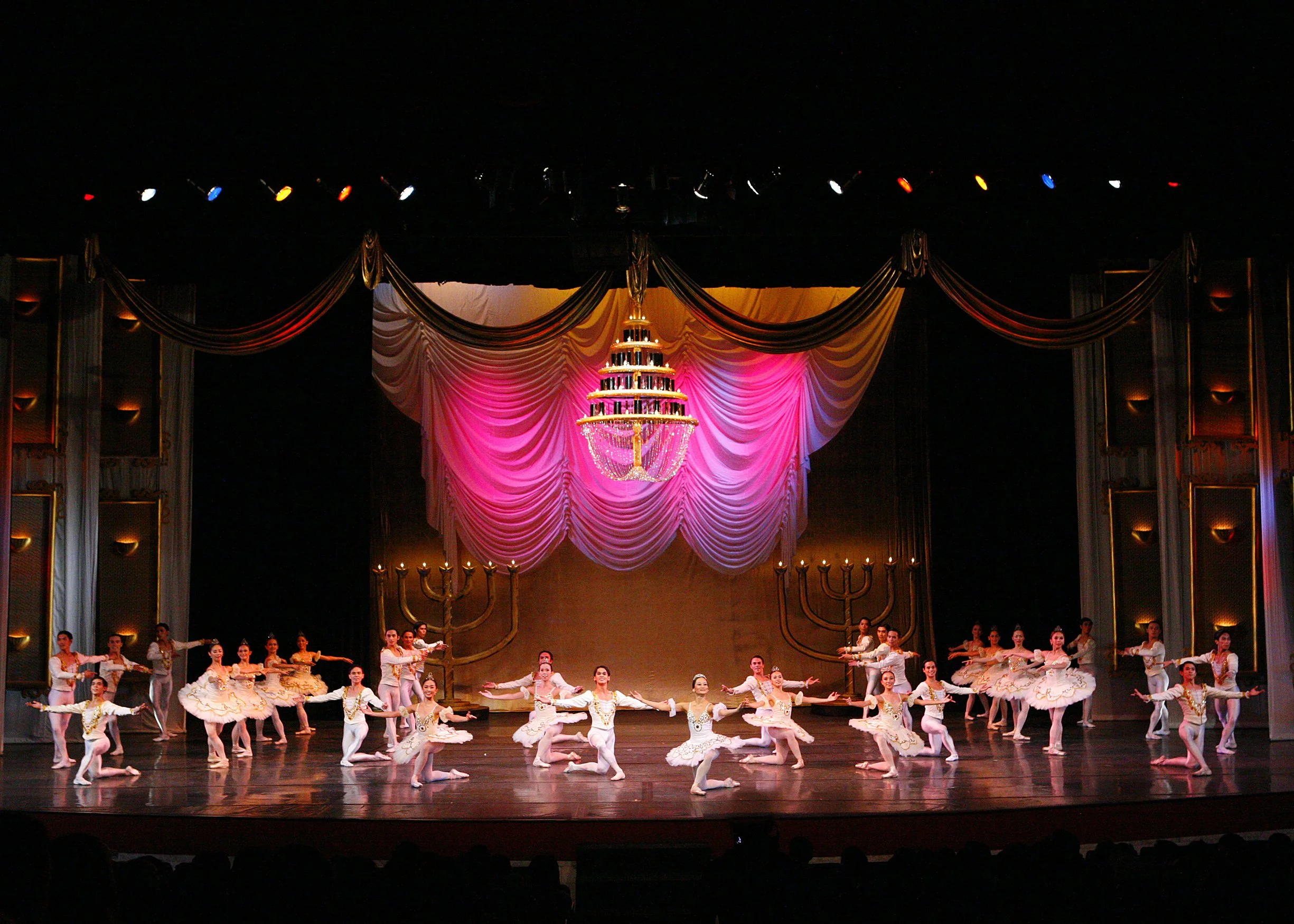
These include the 32 fouettes of Paquita at the end of Act 2, all of the leaps and multiple pirouettes and the classical variations.
“I only used classical ballet steps in my vocabulary but I did keep the Spanish flair and character dance steps into the Mazurka and Gypsy dances. I made the Matadors into a duo and integrated them with the gypsy girls,” Lisa says.
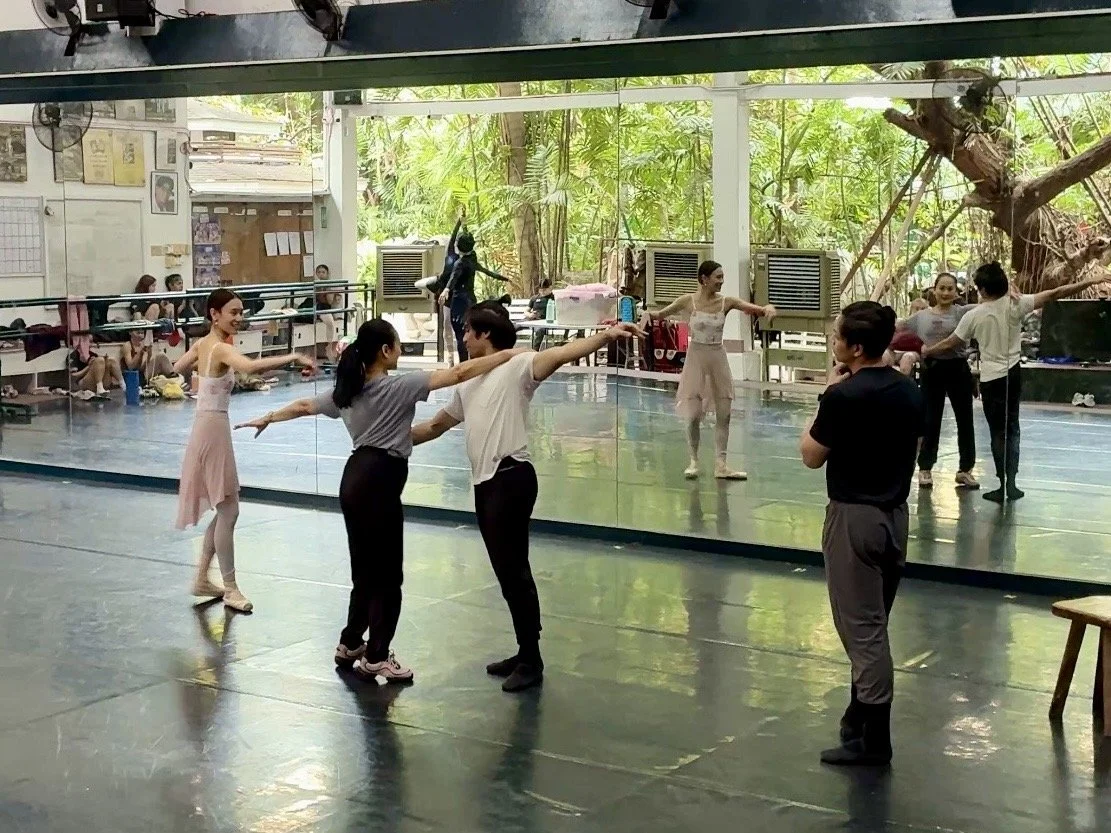
After reading the story of Paquita in a book about rare Russian ballets, Lisa started to build her version chapter by chapter in her head. But the actual creation didn’t happen until she was in the studio in front of the dancers.
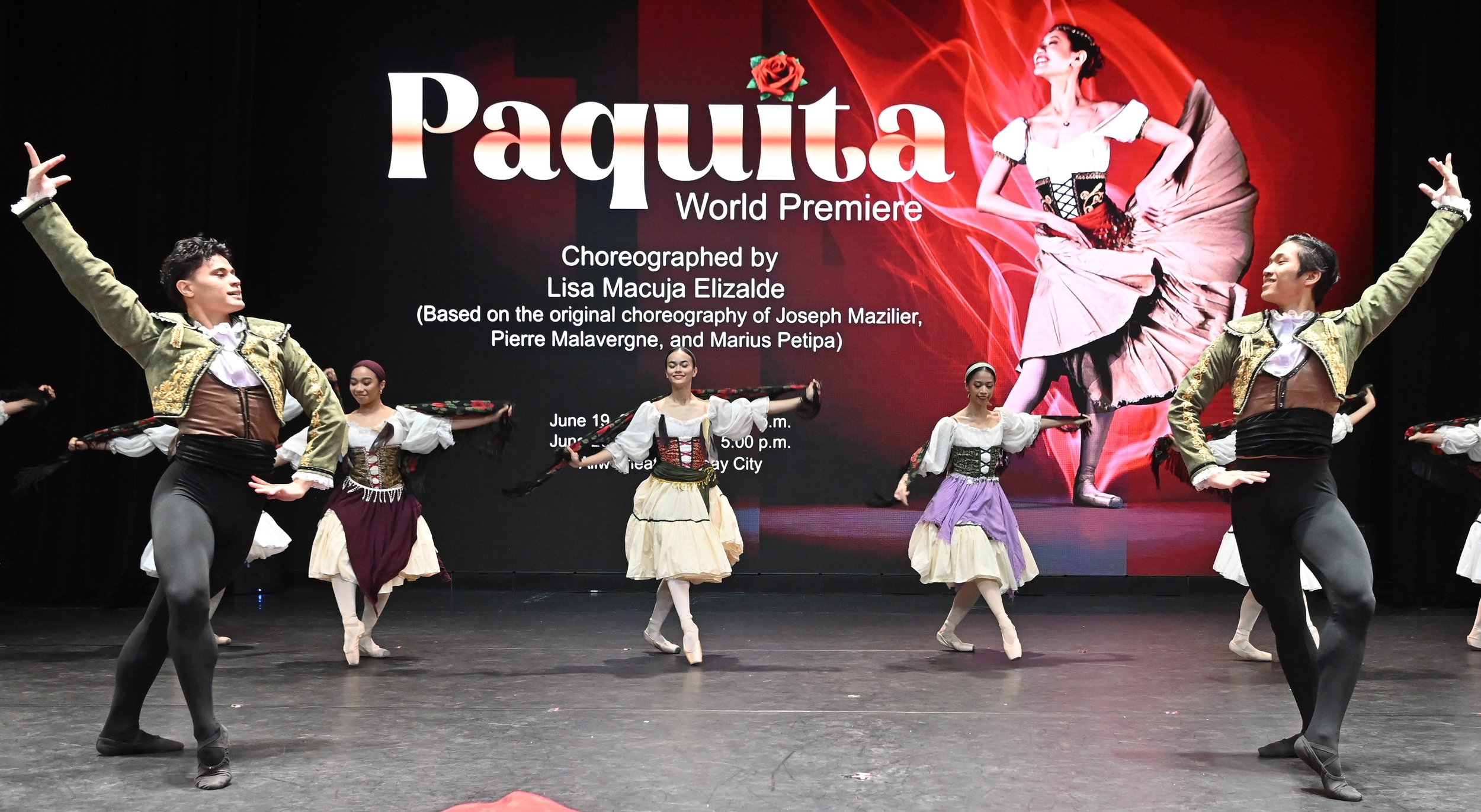
Soloist Noah Esplana and company artist John Stanley Alamer are the matadors shown along with the gypsy girls in one of the many scenes in Paquita highlighting fiery dancing.
Lisa combined and interchanged music pieces. She included some of the famous variations but to be danced in the beginning and middle portions of the ballet, instead of having all the variations in the end divertissement the way it is normally performed.
“I am glad that we have had the luxury of time to be able to mount Paquita as we started working on the choreography in March as soon as we finished Sleeping Beauty which opened our Prima season. I work very fast once I start choreographing a ballet and so the ballet choreography was actually finished in about two weeks! But this was followed by continuous cleaning, polishing and refining.”
As Ballet Manila is 31 years old and has had its training in Russian classical ballet as espoused by the pedagogue Agrippina Vaganova, Lisa can rightfully claim that her company is the only one in the Philippines that can present a full-length Paquita. “Most especially because we have a very strong corps de ballet of women for the finale,” she says.
Lisa is proud of what they have accomplished in Paquita and she can’t wait to share it with an audience. “The most challenging part in creating the ballet is having the dancers that are strong. We’re just the right size company, 38 dancers strong, to be able to present this full-length ballet. Ballet Manila is very ready.”