Both sides now: After dancing in ‘Paquita,’ Lisa Macuja Elizalde choreographs its full-length version
By Susan A. De Guzman
Lisa Macuja Elizalde loves a challenge.
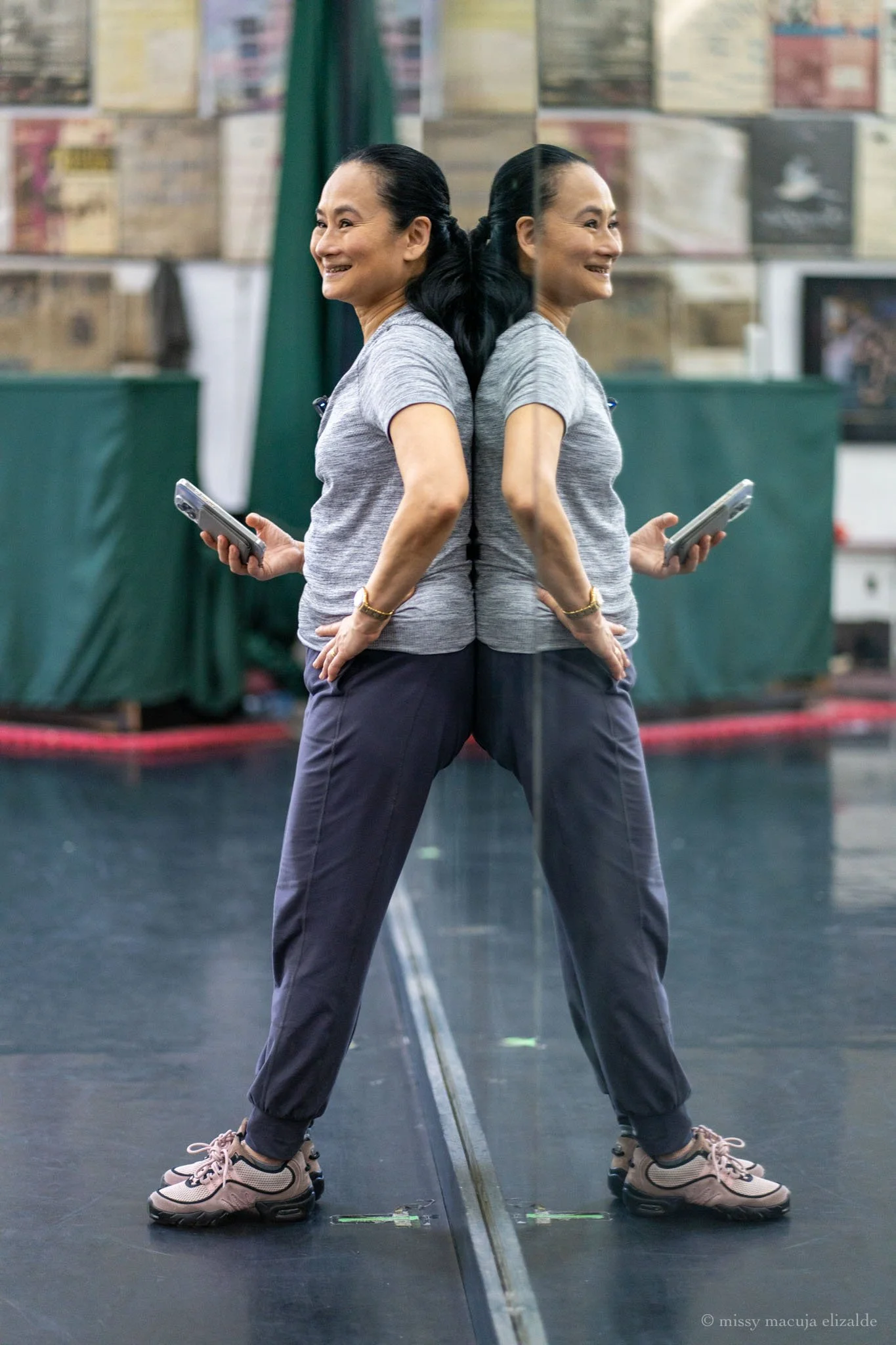
In a first for the Philippines, Ballet Manila artistic director Lisa Macuja Elizalde is choreographing a full-length Paquita, the second offering in the company’s Prima season. Photo by Missy Macuja Elizalde
And one that Ballet Manila’s artistic director set for herself for the company’s Prima season – comprised of an all-classical fare of her choosing – was to create a full-length version of Paquita.
It is a first in the Philippines.
For while the Paquita divertissement has been a constant in the Ballet Manila repertoire over the years as a platform for strong technique, never before has its story been seen in its entirety in the local scene.
“I have always wondered where this beautiful Spanish-flavored classical ballet excerpt comes from in context with the story of Paquita. The excerpt is always described as the culmination of the love story of a gypsy girl, Paquita, with the French officer Lucien,” Lisa says.
When she started to dig into the story and finally read it in full, she thought it was one that indeed had to be told. “I decided that it would be an exciting and perfectly manageable two-act classical ballet to present to the Filipino audience – mainly because the story is very much like Giselle but with a happy ending! And we all know how the Filipino audiences love a happy ending.”
While inspired by the originals created by Joseph Mazilier, Pierre Malavergne, and Marius Petipa, Lisa purposely did not watch any of the full-length versions “to keep the choreography truly my own.” What she did, instead, was to read the lengthy text in a book about rare Russian ballets that included Paquita. She also listened to the music of the full-length ballet by Anna Marie Holmes, Kevin Gaile and Li-Mei Liang.
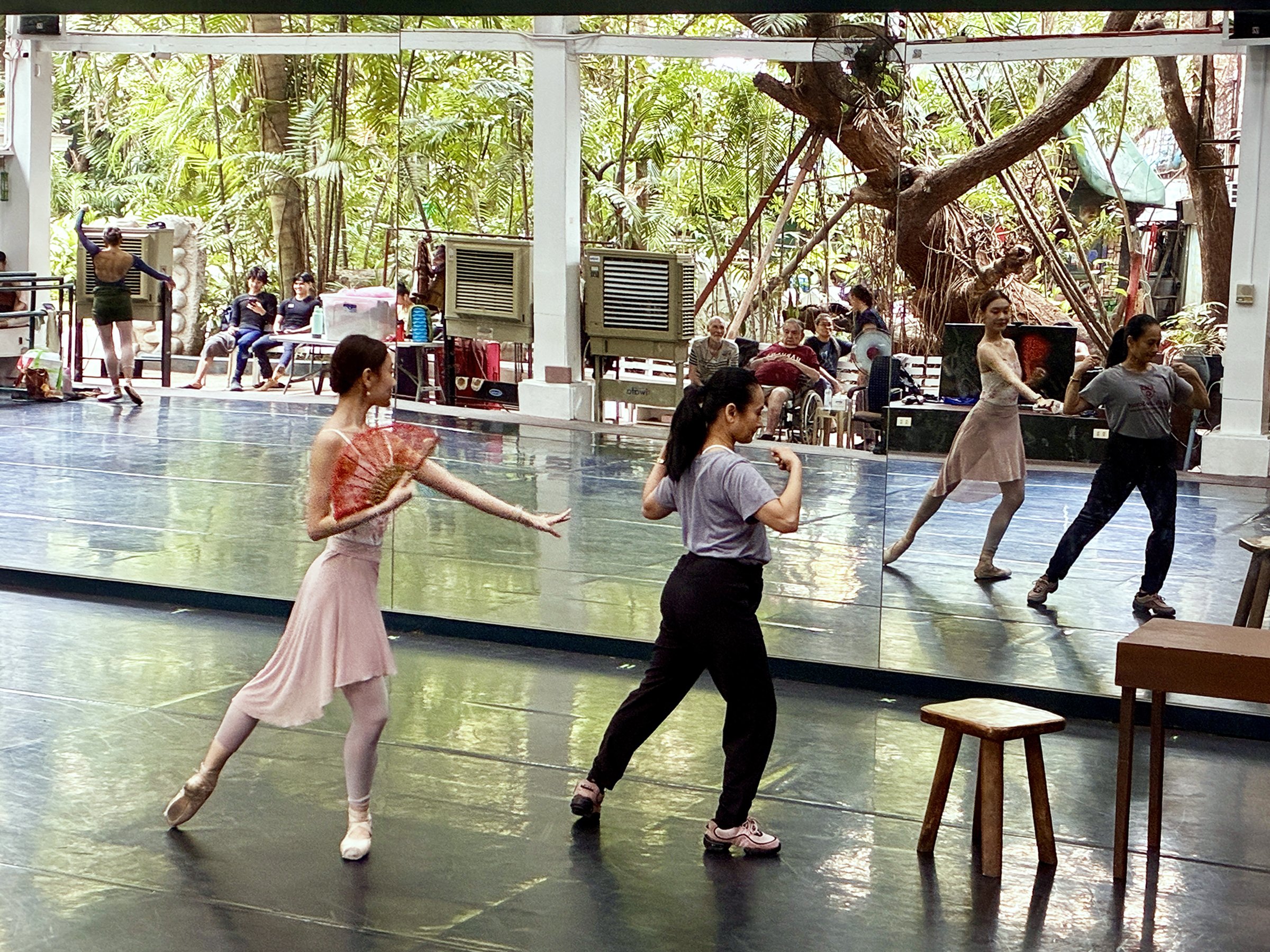
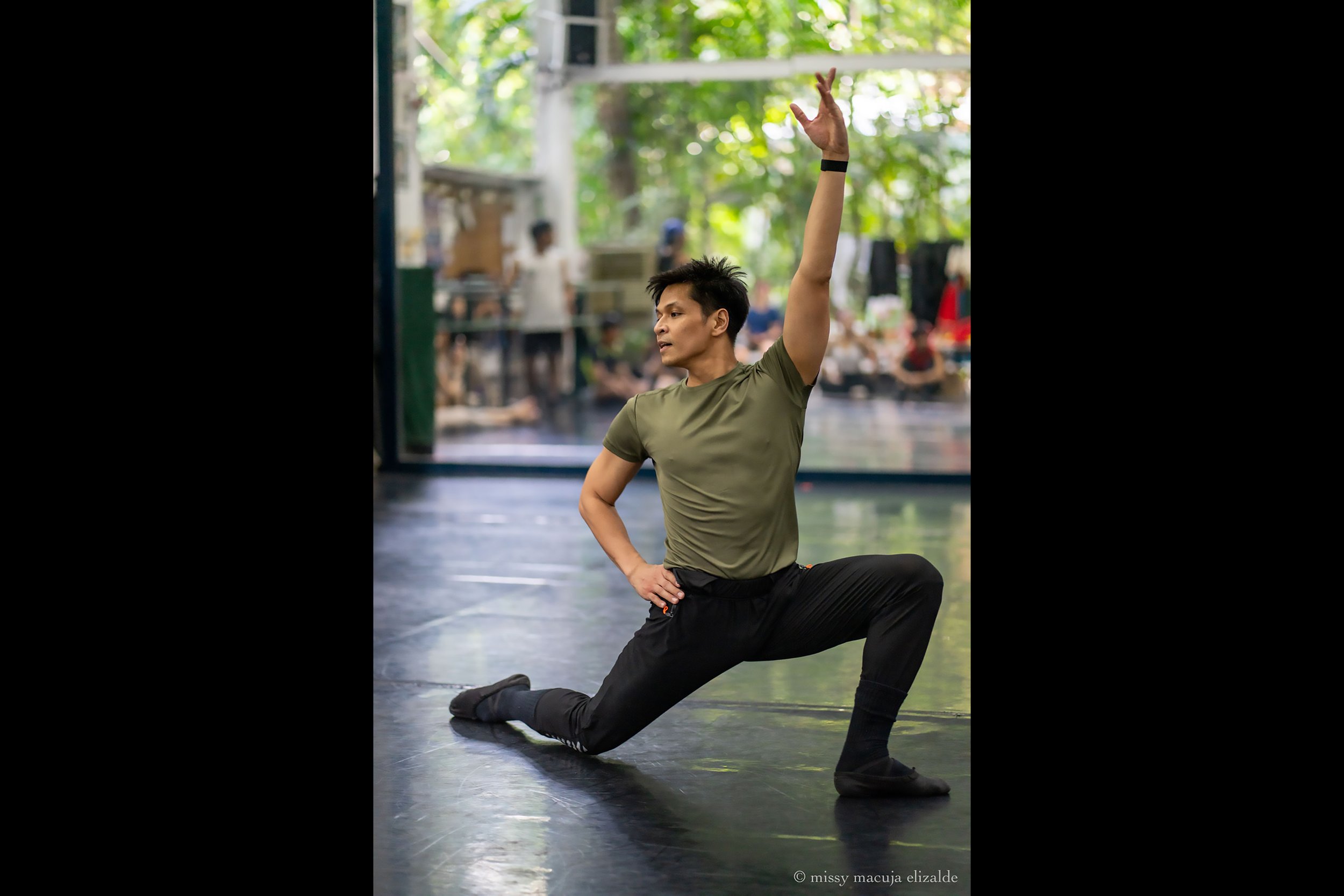
Lisa Macuja Elizalde lays out the initial steps for her full-length version of Paquita, with principal dancer Abigail Oliveiro taking cues from her. Photo by Giselle P. Kasilag
“I started to build the ballet chapter by chapter in my head. But the actual creation didn’t happen until I was in the studio in front of the dancers,” Lisa notes.
She started piecing together her building blocks. “I combined and interchanged music pieces. I included some of the famous variations but to be danced in the beginning and middle portions of the ballet instead of having all the variations in the end divertissement the way it is normally performed.”
As in her version of Le Corsaire (2023), where she made the Pasha dance, and when she added to the choreography of Don Quixote (2023) with an extended role for Gamache, Lisa similarly turned the usually mime characters in Paquita into dancing ones – the Spanish Governor Mendoza, Doña Seraphina and the parents of Lucien, General Comte D’Hervilly and his wife. She also fleshed out the love triangle of Paquita, Lucien and Iñigo a little bit more.
“I only used classical ballet steps in my vocabulary but I did keep the Spanish flair and character dance steps into the Mazurka and Gypsy dances. I made the Matadors into a duo and integrated them with the gypsy girls. What the audience will see in this Paquita is a love story with a twist. It can be quite comedic at times. But there will still be drama and lots of dancing!”
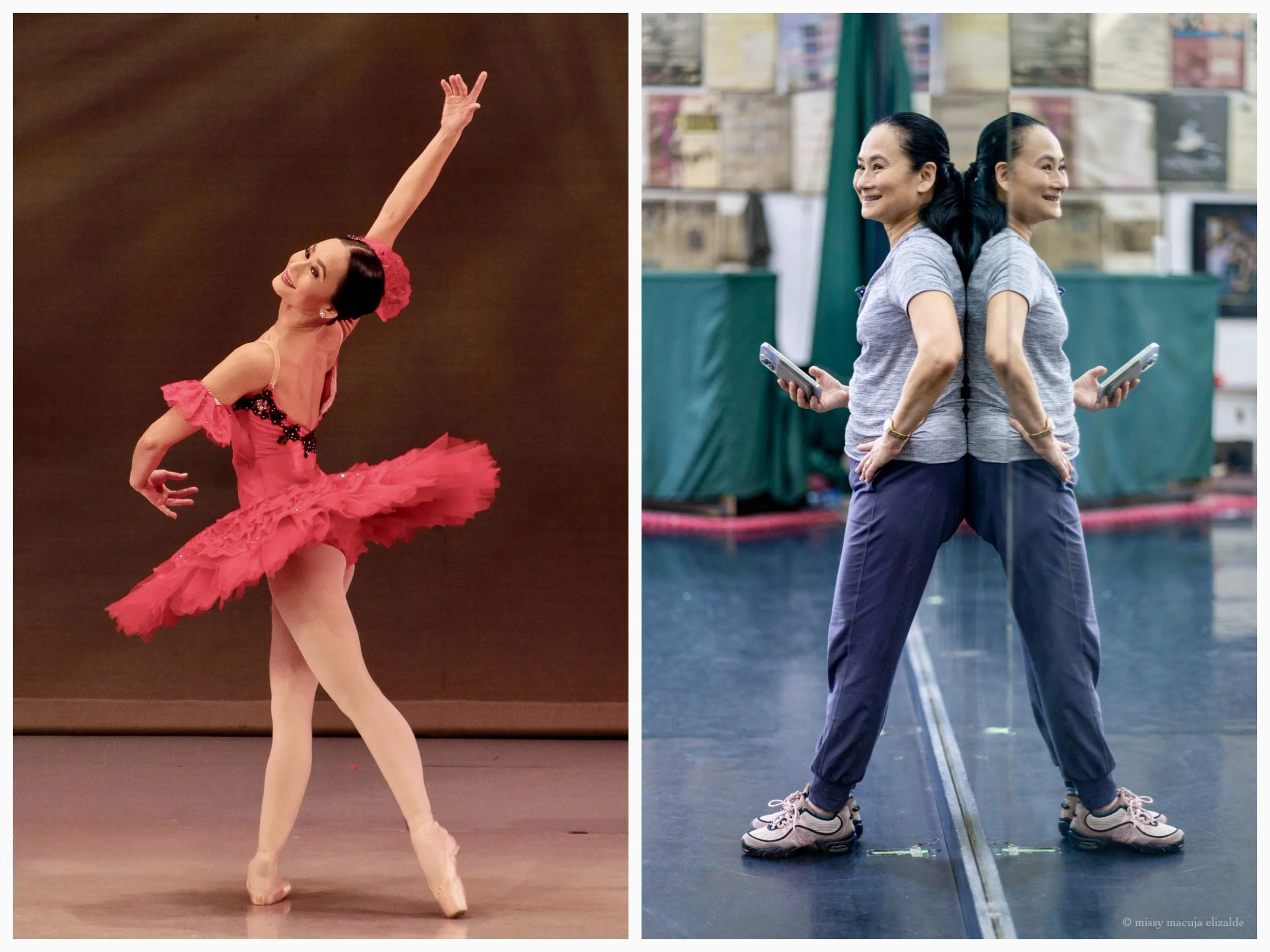
Lisa performs an excerpt from Paquita in The Legends and the Classics (2013), the last time she danced the role. Photo by Jojo Mamangun
Set in French-occupied Spain, Paquita follows the adventures of a French girl of noble birth who is kidnapped by a band of gypsies and raised to believe she is Spanish. At a public gathering meant to honor fallen French soldiers, Paquita catches the eye of young French officer Lucien who is of noble birth. She is attracted to him in return but she hesitates as she considers herself unworthy of his status. Thrown into the mix is a plot to kill Lucien which is thwarted and the revelation of Paquita’s true identity.
With elements akin to those in a telenovela, Paquita – Lisa believes – will resonate with Filipino audiences. “The story of Paquita is like a fairy tale because Paquita is almost like a Cinderella figure whose status in life suddenly changes because she discovers that she isn’t a gypsy but of noble birth which enables her to be married to Lucien. We grow up on fairy tales especially those that are about romance and adventures and everyone simply loves a happy ending.”
But apart from the story, Lisa expects that viewers of Paquita will be drawn to the dancing as well. “I think the Filipino audience will still gravitate most towards the technical aspects of the dancing such as the grand leaps and turns of the men and the 32 fouettés of Paquita at the end of Act 2 and the famous classical variations that they are familiar with.”
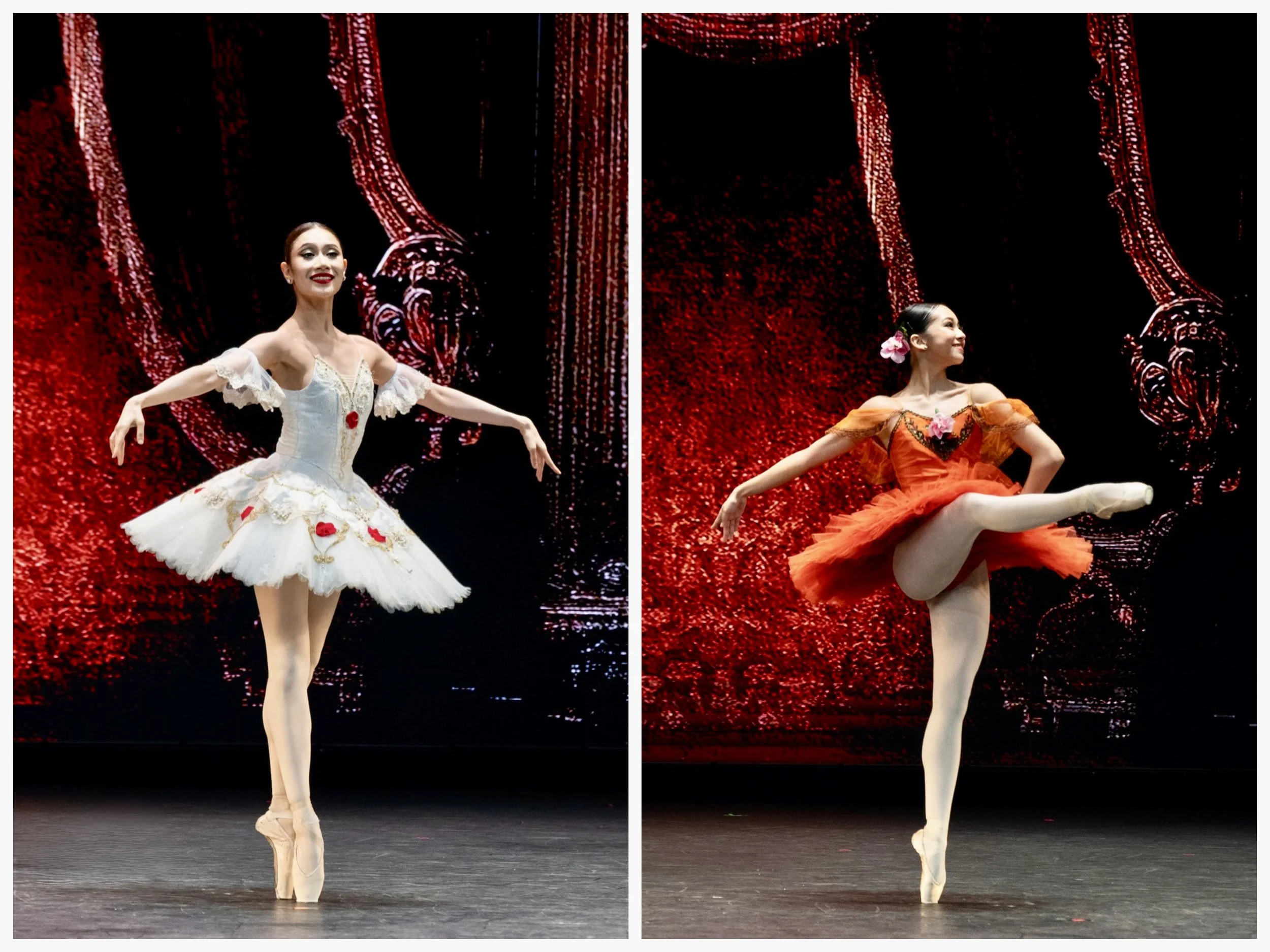
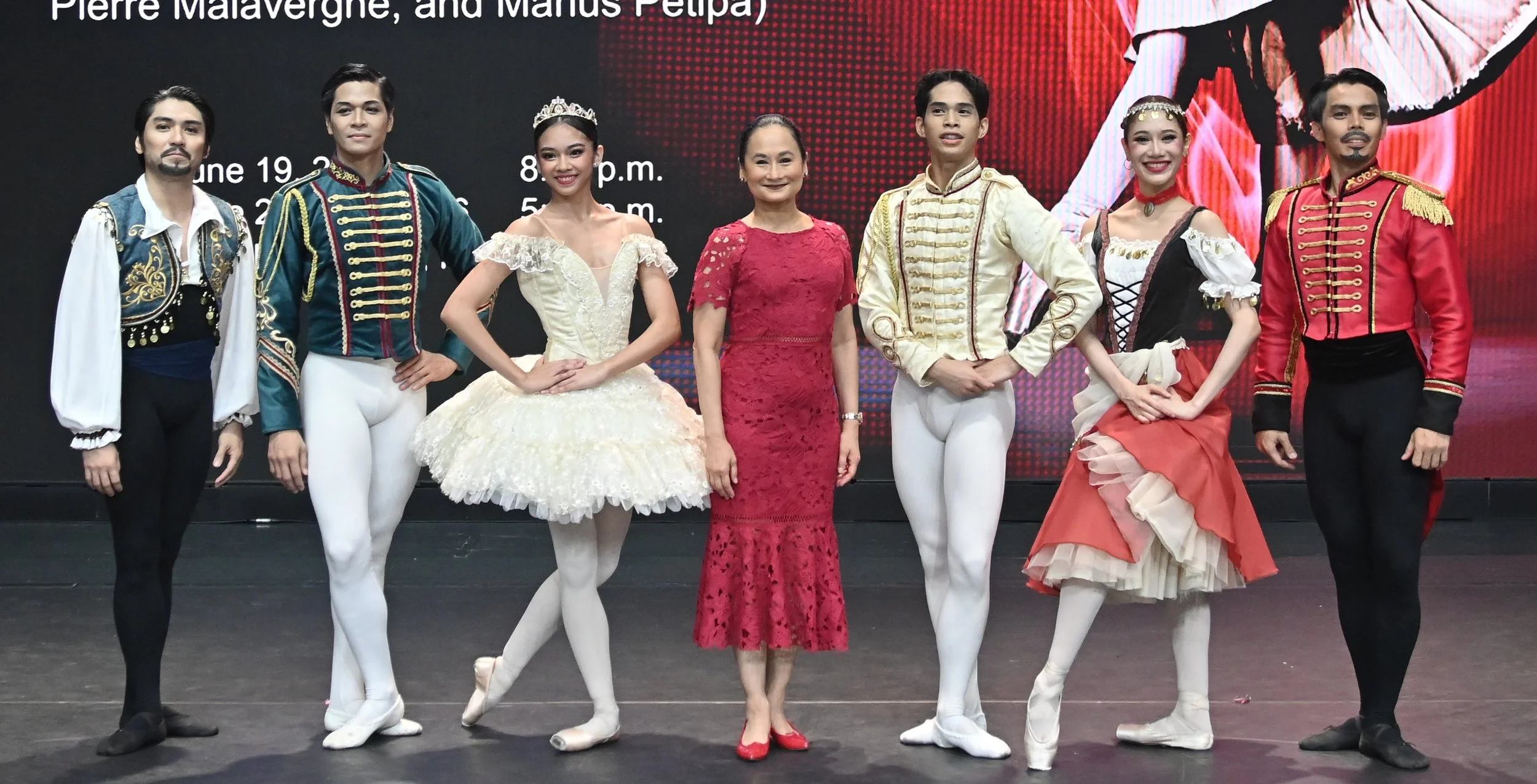
Principal dancer Abigail Oliveiro and soloist Shamira Drapete are both making their debut in the title role of the full-length Paquita. Photos by Erica Marquez-Jacinto
As with the Paquita divertissement, the full-length ballet is a true showcase of technical prowess as exemplified by the 40-strong Ballet Manila who are well-trained in the Vaganova classical style. “When you are creating a full-length two-act ballet like Paquita, you need strong ballet dancers who have the stamina to be able to dance well until the last divertissement. You need dancers who can dance in a group or as soloists. You need a full women corps de ballet that are strong dancers en pointe with the necessary style of ports de bras. You need dancers that have charm and a sense of humor to tell the story. You need artists that can act and dance at the same time.”
Lisa is also very clear about the musts for the performer playing Paquita. “Having a ballerina that is strong, classical and refined in technique but is able to add a lot of Spanish flair and temperament as well as spunk with comedic timing – this is so important when presenting Paquita as that is exactly what you need for the title role. Ballet Manila is so fortunate that we have Abigail Oliveiro and Shamira Drapete who are both debuting in the role and dancing her so well!”
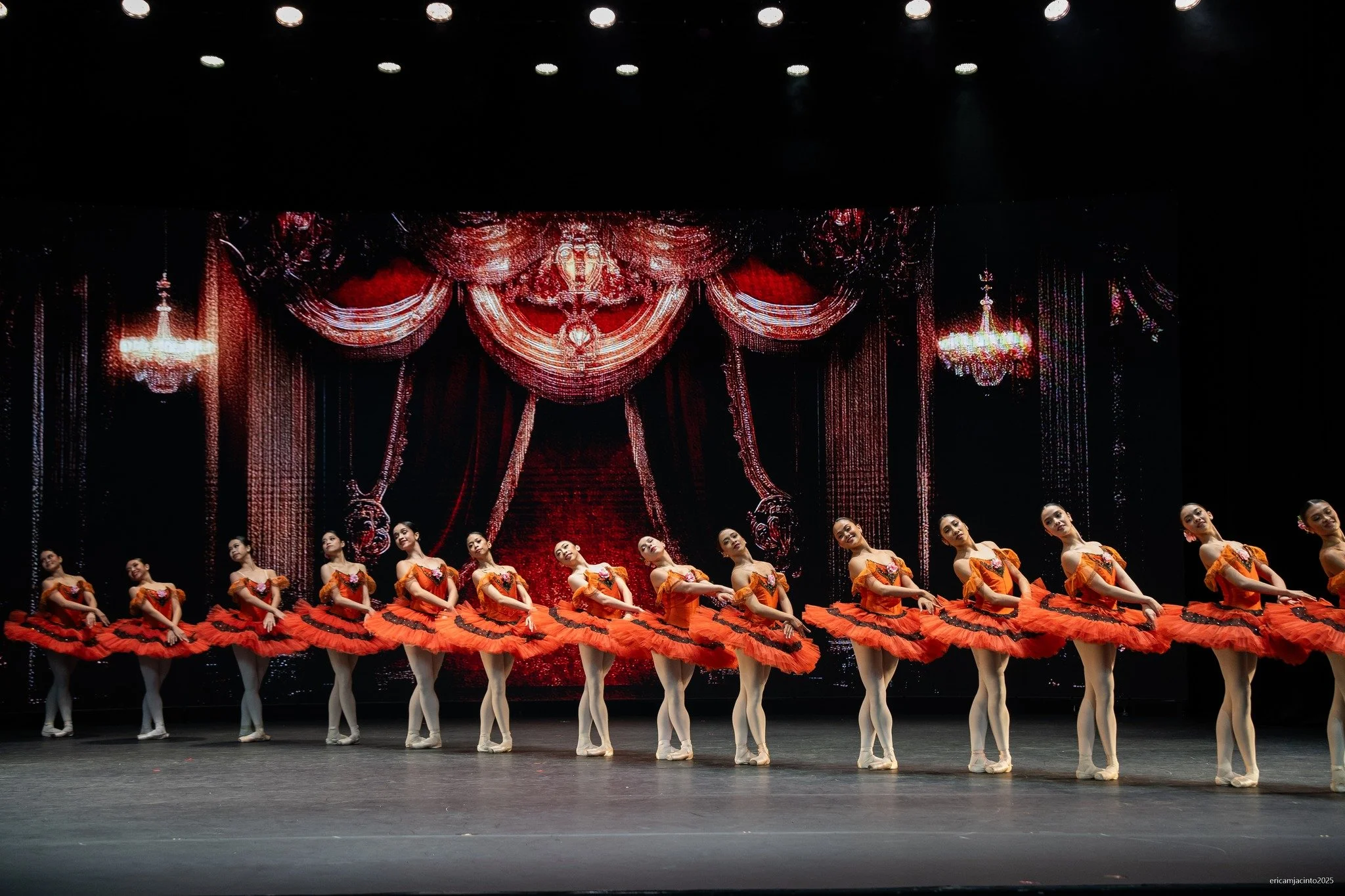
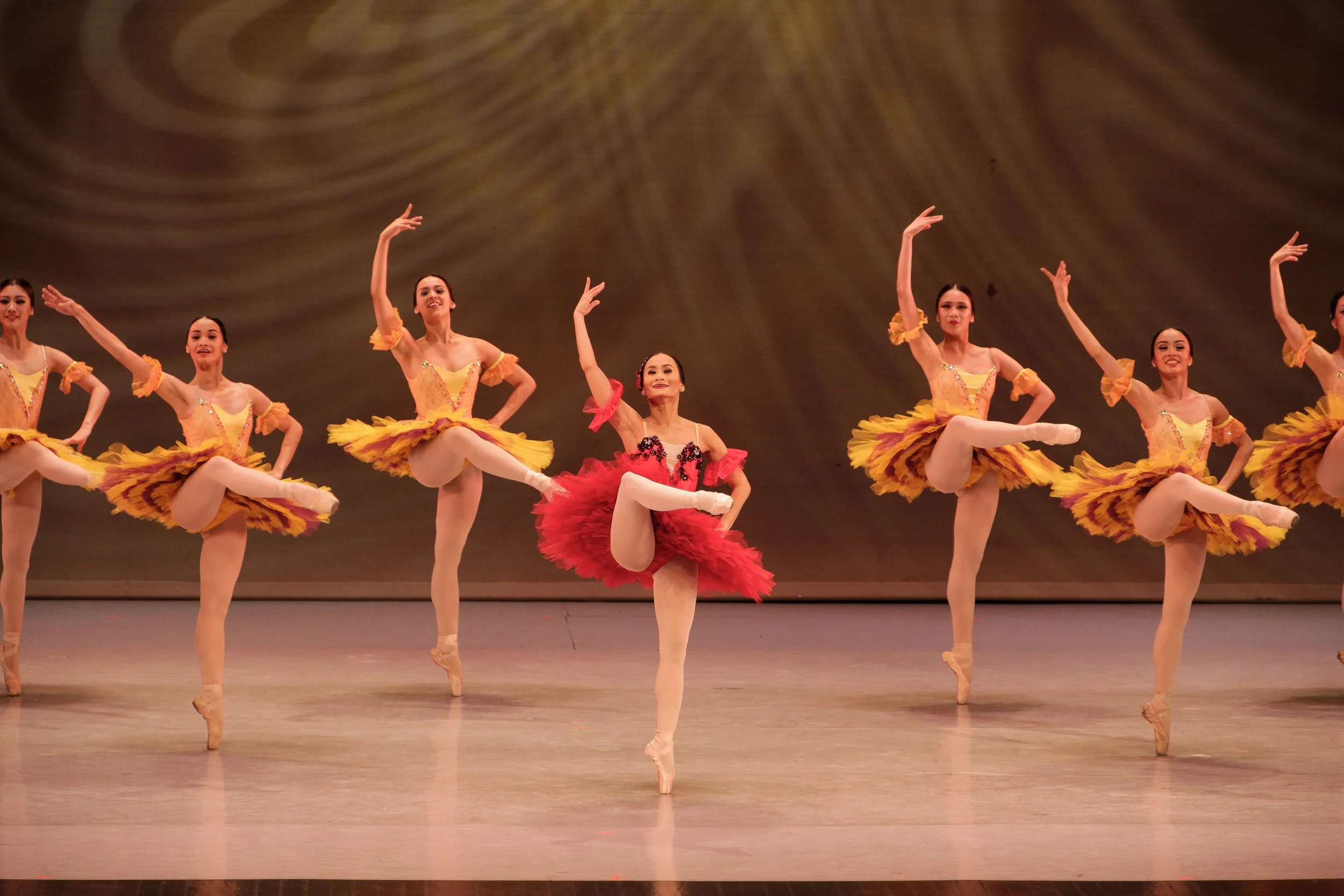
Paquita is characterized by a strong corps de ballet, as seen in the ballet excerpt shown in The Pearl Gala, Ballet Manila’s 30th anniversary concert. Photo by Erica Marquez-Jacinto
And since it is a world premiere, everything about Paquita is new—costumes, sets, music arrangement, lighting design. With opening night drawing near, Lisa is thrilled to be sharing the ballet that has been keeping her on her toes since March.
“Personally, this world premiere of Paquita is like a baby of mine. When you create a new full-length ballet almost from scratch, it is like giving birth to a living, breathing creation. I have done this in the past with The Nutcracker, Le Corsaire, Swan Lake and The Princess Trilogy (Cinderella, Snow White and Sleeping Beauty) but because Paquita is such a rare ballet to do in a full-length version, this makes it a much more interesting and special project. It is a ballet that will be uniquely Ballet Manila’s – a part of our classical ballet legacy!”
Paquita will have its world-premiere run on June 19, 20 and 21 at Aliw Theater.